Your sister-in-law "Rachel" just had her fifth baby. When she found out she was pregnant, she cried. When she got nausea for 3 months, she complained every day. Meanwhile, you are single and childless. Or maybe married and childless, month after month, year after year, quietly, endlessly grieving.
You call the printer to discuss printing costs for your latest book. "You want us to handle the shipping too?" hollers the printer guy. "We can do that, you know. We just had an order this morning for ten cases of Linda Byler's new book! She's doin' real well."
"No. Thank you," you reply, exhaling just a bit of venom into the phone. You've been working at this writing stuff for years, and if someone orders ONE case of books, it's cause for celebration.
At a ladies' weekend, your friend "Karen" asks if anyone has a safety pin. "This skirt is too big and I'm afraid it's going to slide off my hips. I keep losing weight with my IBS." You, on the other hand, need the safety pin to add another inch to your own waistband. You leave the top half of the zipper unzipped and use the pin to bridge the two sides, and tug your sweater down over it. Karen can find her own pin, thank you very much.
A woman your age that you met at a ladies' retreat just friended you on Facebook. You click on her profile and there is the obligatory header photo of a wedding, with the happy young couple in the middle, mom and dad to the right, siblings and in-laws and grandchildren to the right, to the left, before and behind, out in a sunny field. You think of your crew, all functional adults and all determinedly single. You click "friend" to be nice and "unfollow" because you don't need to see her grandbaby posts.
Your friend Dorcas is once again complaining about how busy her husband is. You can't help it: you turn to her and say, "Be thankful your husband has a ministry and a good job." Because your husband is a farm laborer with no ambition for better things, and your own ministry gifts are buried in the hard work of surviving.
Dorcas also likes to go off about her amazing grown kids and how well they're doing in college and what a great time she and her daughters had on their trip to Seattle. And you think about what might have been if your son or daughter had not moved out and turned to alcohol. Or if they had lived.
You're at a lovely outdoor wedding. Everything is sunny and happy and decorated with beauty and creativity and, it must be admitted, money. The young couple has an air of innocence. You inevitably think of your daughter who is pregnant, unmarried, and living with a man who scares you. A verse comes to mind: ". . .to everyone who has, more will be given, but as for the one who has nothing, even what they have will be taken away." [Luke 19:26 NIV]
You sigh and are glad this is the summer's last wedding.
All the above are based on actual incidents I experienced or heard about, and more or less modified.
You've been there, I'm sure. The happy announcement, the excited phone call, the whispered news, the good fortune made evident in travel and new purchases, the funny anecdote, the grand celebration.
Half the time these lucky people have the audacity to complain. The morning sickness, the crazy-busy with the new business, all the decisions with this wedding!
Once again, the good things didn't come to you, and you feel overlooked, left out, passed over, disappointed, unlucky, and less than. Again. And again.
But once in a while it IS you! Overwhelmed with your good fortune, your unexpected blessing, your wonderful news, you turn to friends and family, bubbling over with the joy of it. And you are met with cold faces, a flickered eyebrow, and resentment. "Well. Aren't you lucky. Must be nice."
And much of the bubbling joy goes instantly flat.
Having been on both sides of these stories, here are some things I try to remember:
1. Joy and sorrow are best shared in a caring community. "Rejoice with them that do rejoice, and weep with them that weep," the Bible says. Good news shrinks to a quarter its size and becomes almost meaningless if you can't share it with someone who will be happy for you. Sorrow unshared swells and becomes overwhelming.
2. You're a grownup. Adults are people who know it's not all about themselves. This is your friend's moment. Let her make the most of it, and don't steal any of it. It's not about you.
3. Entering into the joy of another makes you vulnerable. It can make you feel your losses more sharply and upset your sense of fairness and rattle your fragile identity. But this is the price of community, and friendship, and personal growth, and eventually redemption.
4. It's not a zero-sum game. More weddings in your family don't mean fewer in mine, except for the highly-unlikely case that if your child hadn't got in the way, my child would have married the same person. More book sales for me don't mean fewer for you. The same with babies, and money, and so much more.The pounds she loses do not get glued to your hips. When the time is right, there will be plenty of success and blessings to go around.
5. Rejoicing can be a deliberate act. As already quoted, "Rejoice with those who rejoice;" And from Deuteronomy: "There, in the presence of the Lord your God, you and your families shall eat and shall rejoice in everything you have put your hand to, because the Lord your God has blessed you."
I take from this that, instead of being based solely on how you feel, rejoicing is a decision and a deliberate act. Does that mean you have to pretend? Possibly. But if you choose the behavior--squealing and smiling and hugging and hopping up and down--the emotions can't help but follow. This is an investment in your own growth and in the people who love and support you.
6. You want to be This person, the one that people can't wait to tell their news to, because you will exclaim and affirm and make it such fun to tell. And not That person, the one that people avoid telling anything to, because of the inevitable flattening of all their joy, and the sighs and jealousy and snide comments that reach out like a corsage pin and pop your happy balloon.
7. You are not forgotten. You have a Heavenly Father who sees and knows, who weeps with you, who is truly with you in the waiting. He asks you to believe and hope and obey when you can't see a thing. This is like a pregnancy. Something beautiful is growing, all unseen. Every day is crucial to its development.
8.Your turn will come, and when it does, you will want to call up your sisters, post pictures on Facebook, tell all your friends, and put the news in the church bulletin. Your joy will be affirmed and magnified if others rejoice with you, hugging and laughing without resentment or jealousy. So do the same for them now, as an act of faith that when the time is right, the good things will come to you as well.
And even if you never have a happy announcement of any kind, you will find that your deliberate rejoicing paid off in personal growth, healthy friendships, and unexpected redemption.
[This post was inspired by two of our kids leaving early this morning to fly to a wedding in Missouri. I am too happy for everyone involved to be jealous--my friend Darlene the mom, her son Travis the groom, Christina the lovely bride, and everyone who is there to celebrate with them.
Travis volunteered with a prison ministry in Oregon for a year and a half and did a lot of hiking with Ben and came to our house for Sunday dinners. He and Christina came for Thanksgiving dinner last year. When I set the pies on the counter, Christina quietly told me that there is a hair on the apple pie. She calmly removed it. And then she cut out a slice of that same apple pie and ate it!
People, she is a gem of unusual quality, and I am rejoicing for her fortunate new husband and in-laws.]
Thursday, April 12, 2018


Monday, April 09, 2018
ABC Post 9--Traveling, Tea, and Coming Home
My Letter from Harrisburg article will do double duty as April's newspaper column and today's April Blogging Challenge post.
Traveling brings sweet returns
In a few days I’ll be at a church camp in Montana where the paths are muddy and the bathrooms won’t be conveniently located. I’m taking a coat and boots since a “snow event” is predicted and also NyQuil and cough drops, just in case, since I’m giving four speeches. I can’t count on having phone or Internet service there in the mountains.
I can’t wait.
In a week, I’ll be home again, making a pot of perfect black tea in my own kitchen, looking out over the budding lilacs and Powerline Road as I sip from my favorite cup.
I can hardly wait for that either.
I travel more than most Mennonite women, I’m guessing, because I speak at retreats and conferences at least twice a year. Also, we live on the West Coast, which is a long way from everywhere, and most of my family members live more than 1,500 miles away.
The last couple of years have included one women’s retreat in Colorado and one in Indiana, a wedding in Utah, my dad’s 100th birthday party in Minnesota, a Christian school conference in Pennsylvania, a visit to my uncle in Kansas, and two trips to Virginia — one for a writers’ conference and another for a vacation with my two sisters.
I’ve somehow stayed awake for many 3 a.m. drives to Portland, listening to NPR. I’ve dragged huge suitcases full of books onto shuttles and out to rental car parking lots and even into the restrooms at the far end of the baggage claim area on the lower level at the Portland airport, since those are the most convenient facilities before the check-in counters.
I’ve made the same sort of early morning drive from central Minnesota to the Twin Cities, in bitter cold, through one small town after another, where the only radio stations are Catholic Answers and droned reports of hog and cattle prices. There are no coffee stands to be found anywhere, and it is often 50 miles before the next open gas station.
Despite all the inconvenience of travel, all the discomfort of sleeping on airplanes, all the stress of gate changes and late flights and bad weather and pushing on through the night on Interstate 80 through Nebraska, I love to travel. It feeds a deep curiosity and is always full of surprises.
Most places are not like Oregon.
The horizons are level in the Midwest and the houses are older in Virginia. At gas stations in the South, I’ve opened the lids on hot stainless steel kettles and looked at the boiled peanuts floating there, soggy and a bit slimy, but I have never had the courage to eat them.
Women from isolated churches in the West are tougher and less inhibited than women from large and long-established Mennonite communities in the East, I’ve found. The accents are different everywhere, the word choices, the priorities, the food, even the shade of green in the trees.
Road signs in South Carolina say, “Have Pride. Don’t Litter.” In Minnesota, signs at a one-lane bridge read simply, “Take Turns.”
Battlefield memorials and historical plaques show up everywhere on the East Coast. I couldn’t find separate garbage cans for recyclables at the Raleigh-Durham airport. People get upset if you eat in the Metro stations in Washington, D.C., for fear that dropped crumbs will draw rats. They don’t want to be like New York City.
Kansas and Oklahoma have winds like you’ve never experienced before, dry and steady and strong, slamming your car doors shut and whipping your skirts about with shocking impertinence.
I’m told my hellos and goodbyes are too abrupt for parts of the country, with not enough chitchat about the weather or meaningless inquiring after everyone’s health. If you want to fit in, in Minnesota, you act nonchalant about 20 degrees below zero with 30 mph gusts of wind.
Travel is a great teacher, making you sit back and watch and learn. Going to a new place makes you feel different and a bit left out, as we all ought to feel, now and then, in doses just large enough to make us welcoming to strangers who show up in Oregon and don’t know how to order a latte or return a soda can.
In spite of the many benefits of travel, I always try to bring a bit of familiarity with me in the form of hot black tea.
At houses, camps, dormitories, airport terminals, motels and churches, I’ve unpacked my travel-sized electric kettle, a tin of loose black tea, and my slightly dented but non-breakable stainless steel teapot, and I’ve mixed boiling water and a scoop of pungent black tea for a comforting taste of home.
More often than not, it is a disappointing exercise. The water is full of minerals and tastes of sulfur or the cup of tea has a disturbing, barely visible film shimmering on top, or the leaves won’t release their flavor and the tea is weak and tasteless.
So I resort to coffee instead, its robust flavor better able to overpower the oddities of local water variations.
Then I count the days and nights until I can be at home again, in pajamas in the dim morning light, with cats and daughters slowly waking up, brewing tea in my own warm kitchen, with the freshest and best water in the whole world.
“Do you like doing this sort of thing?” my daughter Emily asked me when I was about to leave for a speaking engagement in Pennsylvania in January.
I said, “To be honest, I’m already thinking, ‘Only one more week and I’ll be home again.’ ”
My husband turned to Emily and said, “I think she goes away just for the thrill of looking forward to coming home.”
Invariably, after a few months have passed in which I’ve caught up with laundry, organized my sewing patterns, and cleaned the pantries, a tiny restlessness emerges, a sense of places calling.
When the email or letter or phone call arrives with the invitation to attend or speak or help, I’m ready to say yes.
So the endless push and pull continues. New places call me to discover them, and home calls me back to the loved and familiar. I would never want all one or the other.
A perfect pot of tea is all the more appreciated after a week of coffee, my family is more precious after seeing hundreds of new faces, and after I’ve seen deserts and cornfields and kudzu, the oak trees along Muddy Creek in the summer are always obligingly heavy with the precise green color of home.
Traveling brings sweet returns
In a few days I’ll be at a church camp in Montana where the paths are muddy and the bathrooms won’t be conveniently located. I’m taking a coat and boots since a “snow event” is predicted and also NyQuil and cough drops, just in case, since I’m giving four speeches. I can’t count on having phone or Internet service there in the mountains.
I can’t wait.
In a week, I’ll be home again, making a pot of perfect black tea in my own kitchen, looking out over the budding lilacs and Powerline Road as I sip from my favorite cup.
I can hardly wait for that either.
I travel more than most Mennonite women, I’m guessing, because I speak at retreats and conferences at least twice a year. Also, we live on the West Coast, which is a long way from everywhere, and most of my family members live more than 1,500 miles away.
The last couple of years have included one women’s retreat in Colorado and one in Indiana, a wedding in Utah, my dad’s 100th birthday party in Minnesota, a Christian school conference in Pennsylvania, a visit to my uncle in Kansas, and two trips to Virginia — one for a writers’ conference and another for a vacation with my two sisters.
I’ve somehow stayed awake for many 3 a.m. drives to Portland, listening to NPR. I’ve dragged huge suitcases full of books onto shuttles and out to rental car parking lots and even into the restrooms at the far end of the baggage claim area on the lower level at the Portland airport, since those are the most convenient facilities before the check-in counters.
I’ve made the same sort of early morning drive from central Minnesota to the Twin Cities, in bitter cold, through one small town after another, where the only radio stations are Catholic Answers and droned reports of hog and cattle prices. There are no coffee stands to be found anywhere, and it is often 50 miles before the next open gas station.
Despite all the inconvenience of travel, all the discomfort of sleeping on airplanes, all the stress of gate changes and late flights and bad weather and pushing on through the night on Interstate 80 through Nebraska, I love to travel. It feeds a deep curiosity and is always full of surprises.
Most places are not like Oregon.
The horizons are level in the Midwest and the houses are older in Virginia. At gas stations in the South, I’ve opened the lids on hot stainless steel kettles and looked at the boiled peanuts floating there, soggy and a bit slimy, but I have never had the courage to eat them.
Women from isolated churches in the West are tougher and less inhibited than women from large and long-established Mennonite communities in the East, I’ve found. The accents are different everywhere, the word choices, the priorities, the food, even the shade of green in the trees.
Road signs in South Carolina say, “Have Pride. Don’t Litter.” In Minnesota, signs at a one-lane bridge read simply, “Take Turns.”
Battlefield memorials and historical plaques show up everywhere on the East Coast. I couldn’t find separate garbage cans for recyclables at the Raleigh-Durham airport. People get upset if you eat in the Metro stations in Washington, D.C., for fear that dropped crumbs will draw rats. They don’t want to be like New York City.
Kansas and Oklahoma have winds like you’ve never experienced before, dry and steady and strong, slamming your car doors shut and whipping your skirts about with shocking impertinence.
I’m told my hellos and goodbyes are too abrupt for parts of the country, with not enough chitchat about the weather or meaningless inquiring after everyone’s health. If you want to fit in, in Minnesota, you act nonchalant about 20 degrees below zero with 30 mph gusts of wind.
Travel is a great teacher, making you sit back and watch and learn. Going to a new place makes you feel different and a bit left out, as we all ought to feel, now and then, in doses just large enough to make us welcoming to strangers who show up in Oregon and don’t know how to order a latte or return a soda can.
In spite of the many benefits of travel, I always try to bring a bit of familiarity with me in the form of hot black tea.
At houses, camps, dormitories, airport terminals, motels and churches, I’ve unpacked my travel-sized electric kettle, a tin of loose black tea, and my slightly dented but non-breakable stainless steel teapot, and I’ve mixed boiling water and a scoop of pungent black tea for a comforting taste of home.
More often than not, it is a disappointing exercise. The water is full of minerals and tastes of sulfur or the cup of tea has a disturbing, barely visible film shimmering on top, or the leaves won’t release their flavor and the tea is weak and tasteless.
So I resort to coffee instead, its robust flavor better able to overpower the oddities of local water variations.
Then I count the days and nights until I can be at home again, in pajamas in the dim morning light, with cats and daughters slowly waking up, brewing tea in my own warm kitchen, with the freshest and best water in the whole world.
“Do you like doing this sort of thing?” my daughter Emily asked me when I was about to leave for a speaking engagement in Pennsylvania in January.
I said, “To be honest, I’m already thinking, ‘Only one more week and I’ll be home again.’ ”
My husband turned to Emily and said, “I think she goes away just for the thrill of looking forward to coming home.”
Invariably, after a few months have passed in which I’ve caught up with laundry, organized my sewing patterns, and cleaned the pantries, a tiny restlessness emerges, a sense of places calling.
When the email or letter or phone call arrives with the invitation to attend or speak or help, I’m ready to say yes.
So the endless push and pull continues. New places call me to discover them, and home calls me back to the loved and familiar. I would never want all one or the other.
A perfect pot of tea is all the more appreciated after a week of coffee, my family is more precious after seeing hundreds of new faces, and after I’ve seen deserts and cornfields and kudzu, the oak trees along Muddy Creek in the summer are always obligingly heavy with the precise green color of home.
Friday, April 06, 2018
ABC Post 5--Off to Montana With Good Women
 |
| my cozy view |
I speak at out-of-state events, mostly women's retreats, about twice a year. So far, I've always had to fly to get there, since Oregon is far away from everywhere else.
But this time the destination was Big Sky Bible Camp at Kalispell, Montana, so it was within driving distance. ROAD TRIP!! And who should I take along? Well, why not expand our monthly sister-in-law coffee date to a 4-day trip?
Rosie offered her spacious rig. Bonnie couldn't make it. Cousin Trish and Daughter Emily came instead. We left at 3:30 a.m. and then met Laura along Interstate 84.
 |
| Rosie the capable driver |
 |
| Emily was wedged into a tiny spot in the back. |
Then Lois's daughter Lisa flew in and joined us as well.
So in our group it's me, Lois, Rosie, Laura, Trish, Lisa, Emily, and Corey the baby. We are all staying in a dorm. One of the organizers is Lois's daughter-in-law Brenda from Montana, so she hangs out with us when she can.
Going to ladies' retreats can be a lonely business for the speaker, but this time "lonely" is not the word for the day at all.
As mentioned, we are at a Bible camp, so there are muddy trails to the chapel and wood-paneled walls and and a rustic feel all around.
The women wear warm coats and practical shoes.
I've been welcomed to all sorts of settings, from churches to homes to Bible Schools to very well-appointed hotels, but there's something about a slightly wild northern setting, with snow on the ground and wood fires radiating warmth that makes me feel like this is where I fit in the best.
Today I have two talks, morning and evening. Tomorrow morning is my last talk, and then we're dismissed at noon. We'll head part way back and get a motel and then head on home on Sunday.
I'm sure there will again be lots of conversation, but you will never know what was said.
But you are free to gather sisters and friends and relatives and go on a road trip to make memories of your own.
Monday, April 02, 2018
April Blogging Challenge Day 2 & Poverty and Wealth Post 10
The Smucker ladies have taken up the annual April Blogging Challenge.
I will be posting on Mondays and Thursdays.
Emily will post on Wednesdays and Sundays at The Girl in the Red Rubber Boots.
Jenny will post at Here Shall the Wild-Bird Sing on Tuesdays and Fridays.
And Amy will dust off her blog and join us on Saturdays, here at Random Thoughts and Dancing Words.
- - - - -
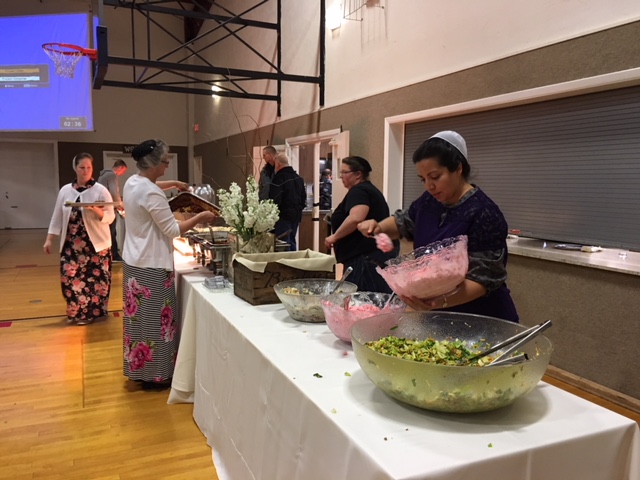
After that series of posts on poverty and wealth, I thought you might like to see a Mennonite fundraiser in action.
Gospel Echoes Northwest is a prison ministry that hosts singing/preaching programs at prisons all over the Northwest. In addition, they organize an annual Christmas cookie project, where volunteers hand-deliver cookies and cards to thousands of inmates, and a Freedom Rally, where volunteers barbecue hamburgers and provide an amazing home-cooked meal to inmates at an outdoor rally. They provide free Bible lessons and I'm sure there's more that I can't think of right now.
One family plus a fluctuating number of singers and sometimes a nanny work with the ministry full-time, and there are many volunteers.
The ministry is funded through the Gospel Echoes Northwest Auction, which is held once a year at Fairview Mennonite's Multipurpose Building. It involves much more than just auctioning off some donated items.
We attended the most recent auction, on March 24.
First of all, tickets for one table, representing ten people, sold for $500, and there were over 40 tables, with some people turned away. Every variety of Anabaptist in Oregon was represented--German Baptist, Independent, Western Fellowship, and sort-of-BMA. Brownsville and Halsey and house churches and Riverside and Fairview and Sheridan and Winston and more. We were all happy to come together for the same cause. We don't always cooperate this well, so the auction reminds us that our similarities are bigger than our differences.
Paul had "bought" one table, which we filled with a few from our family plus friends and Paul's mom and Aunt Susie.

A children's Read-a-thon collected $56,000 in the weeks preceding the auction. The child who raised the most money received a bicycle.
Probably 75 people brought homemade desserts that sold for up to $150 each.

The silent auction featured a certificate for strawberries from Horse Creek Farms, hanging baskets of pansies [which I got, 6 of them], gardening supplies, baby quilts, purses, cleaning supplies, toys, and a lot more.
The meal was truly a feast, and a large team of young people served water and coffee. This is a place to see and be seen, and to meet Mennonite young people you wouldn't otherwise get to know. It's always a very big deal who you get to serve with, and if you're a girl, you act like you want to serve with your brother, but you really hope Rita Baker the organizer pairs you up with that guy from Riverside.
Way back in about 2003, Matt was serving with a girl from Fairview Mennonite, and Kevin Kauffman said he'd pay Matt $100 if he asked her out, and Matt was planning to, but then she left before Matt got up his courage. So we'll never know what Might Have Been.
They also wore black and white, back then. So you see, some things never change.
Dale Ropp, a guest at our table, bought a coffee-chocolate cake and shared with the rest of us.
I left after the meal but before the auction really got underway. Paul reported that everything sold well. "The economy is good, and people are doing well," was his assessment.
A trip for ten to the Cowboy Dinner Tree (a famous restaurant in the wilds of eastern Oregon), spraying for one field, a hickory rocker, a tea party by the Baker ladies, three quilts, a truckload of gravel--the donated and auctioned items filled two pages.
The evening raised $132,000 in addition to the read-a-thon.
Paul also said, "If I were still poor, I don't think I'd want to attend the auction." I agreed. Even with the means to give, the pressure of the auctioneering makes me nervous, which is why I left early.
It's interesting, though, to talk to the auctioneers in private about how this event differs from other fundraisers. At other events, they say, there is always the rich lady near the front who wants recognition for how much she gave. Mennonites subtly nod or flick the cards with their auction number to confirm a bid, and don't like to be singled out as being big donors.
But we note that they still are bidding at a public auction rather than writing an anonymous check in private.
As with anything else Anabaptist:
1. There are lots of unwritten rules.
2. The food is amazing.
3. A lot gets done without a lot of noise or cost.
4. Pretty much any skills are welcome, and the more hands-on the better.
 |
| Amy, Jenny, me, and Emily at a recent Pride and Prejudice performance and girls' night out. |
I will be posting on Mondays and Thursdays.
Emily will post on Wednesdays and Sundays at The Girl in the Red Rubber Boots.
Jenny will post at Here Shall the Wild-Bird Sing on Tuesdays and Fridays.
And Amy will dust off her blog and join us on Saturdays, here at Random Thoughts and Dancing Words.
- - - - -
After that series of posts on poverty and wealth, I thought you might like to see a Mennonite fundraiser in action.
Gospel Echoes Northwest is a prison ministry that hosts singing/preaching programs at prisons all over the Northwest. In addition, they organize an annual Christmas cookie project, where volunteers hand-deliver cookies and cards to thousands of inmates, and a Freedom Rally, where volunteers barbecue hamburgers and provide an amazing home-cooked meal to inmates at an outdoor rally. They provide free Bible lessons and I'm sure there's more that I can't think of right now.
One family plus a fluctuating number of singers and sometimes a nanny work with the ministry full-time, and there are many volunteers.
The ministry is funded through the Gospel Echoes Northwest Auction, which is held once a year at Fairview Mennonite's Multipurpose Building. It involves much more than just auctioning off some donated items.
We attended the most recent auction, on March 24.
First of all, tickets for one table, representing ten people, sold for $500, and there were over 40 tables, with some people turned away. Every variety of Anabaptist in Oregon was represented--German Baptist, Independent, Western Fellowship, and sort-of-BMA. Brownsville and Halsey and house churches and Riverside and Fairview and Sheridan and Winston and more. We were all happy to come together for the same cause. We don't always cooperate this well, so the auction reminds us that our similarities are bigger than our differences.
 |
| Some of the crowd. |
 |
| The cooks made a wonderful meal. |
 |
| A German Baptist volunteer did the decorating and stamped all those individual letters on 450 clothespins. |

A children's Read-a-thon collected $56,000 in the weeks preceding the auction. The child who raised the most money received a bicycle.
Probably 75 people brought homemade desserts that sold for up to $150 each.

The silent auction featured a certificate for strawberries from Horse Creek Farms, hanging baskets of pansies [which I got, 6 of them], gardening supplies, baby quilts, purses, cleaning supplies, toys, and a lot more.
 |
| Servers in black and white. |
Way back in about 2003, Matt was serving with a girl from Fairview Mennonite, and Kevin Kauffman said he'd pay Matt $100 if he asked her out, and Matt was planning to, but then she left before Matt got up his courage. So we'll never know what Might Have Been.
They also wore black and white, back then. So you see, some things never change.
 |
| These two friends were happy to serve together. |
I left after the meal but before the auction really got underway. Paul reported that everything sold well. "The economy is good, and people are doing well," was his assessment.
A trip for ten to the Cowboy Dinner Tree (a famous restaurant in the wilds of eastern Oregon), spraying for one field, a hickory rocker, a tea party by the Baker ladies, three quilts, a truckload of gravel--the donated and auctioned items filled two pages.
 |
| Quilts |
Paul also said, "If I were still poor, I don't think I'd want to attend the auction." I agreed. Even with the means to give, the pressure of the auctioneering makes me nervous, which is why I left early.
It's interesting, though, to talk to the auctioneers in private about how this event differs from other fundraisers. At other events, they say, there is always the rich lady near the front who wants recognition for how much she gave. Mennonites subtly nod or flick the cards with their auction number to confirm a bid, and don't like to be singled out as being big donors.
But we note that they still are bidding at a public auction rather than writing an anonymous check in private.
As with anything else Anabaptist:
1. There are lots of unwritten rules.
2. The food is amazing.
3. A lot gets done without a lot of noise or cost.
4. Pretty much any skills are welcome, and the more hands-on the better.
Monday, March 26, 2018
Post 9--Poverty and Wealth--Comments, Final Thoughts, and Telling
Thanks to everyone who followed this series of posts on poverty and wealth.
The subject struck a nerve, and I hope there are lots of spinoff conversations in churches and homes about how we deal with money and all the other types of poverty and wealth.
I haven't caught up with all the messages and comments yet, but I want to address just a few of them here.
"And could you put it into book form?"
--Rosa Miller
"...I feel like I'm walking right beside you as I read your posts. This would be a great book."
--Linda F. Miller
"Loving these Posts!! Please publish them all together when you’re done!!!!"
--Charlotte Good
"Maybe someone has told you this already, but I feel like there has to be some book potential with this series you're doing."
--Ben Smucker
Answer: Maybe. I asked Ben if it should be more of a Amish-childhood tell-all or a book on Anabaptist finances, and he said one makes a good framework for the other.
Feel free to email me with your ideas of what such a book should include. dorcassmucker@gmail.com
Some recommended books and resources:
"For another example of valuing community (in another culture), check out the movie McFarland, USA, which is about a white coach & family who move to a town that is almost entirely hispanic farmworkers. There are some significant weaknesses in the dominant culture in our country, and strories like yours illuminate them."
--Donna McFarland
"The book by Erik Wesner, "Success Made Simple: An Inside Look at Why Amish Businesses Thrive" answers some of the questions you ask about why Anabaptists tend to be financially successful. Here are the main points from the book that come from a review on Amazon by Joshua Crews: 1. Low personal expenses. It's easy to bootstrap a business without debt when your life is simple; you have few gadgets; and your entertainment is family, games and visiting friends.
2. A fear of God. This persuades away from idleness, and into productivity and investing in the good of others.
3. A commitment to excellent craftsmanship. It glorifies God to make a thing well. That alone motivates quality and a reputation for quality and service that can command premium prices.
4. God, family, community before business. Business is used to fulfill your calling to God, to family and to community. The American mantra assumes that business success is THE goal. The Amish don't see it that way."
--Merle Burkholder
"Byrant Myers book "Walking with the Poor" is an excellent resource for understanding poverty and my definition of poverty comes from his book"
--Merle Burkholder
"Have you seen any of the research or books on the topic of poverty by Ruby Payne? She has done a lot on the topic."
--Patricia Ann Lewis
Some further thoughts on various subjects:
"Imagine my surprise, after growing up in that community, when I discovered nepotism is frowned upon in the great wide world. 😮 Talk about culture shock!"
--Jarita Bavido
"The other thing I think is HUGE is a good name....I think the word spreads that Mennonite young people are good workers and can be trusted. Our dentist told us that he knows many professionals that would hire our youth in a heart beat because they know our youth haven't ruined their brain cells with drugs and alcohol and they would be willing to even invest in training them rather than hire someone more educated who they don't know if they can trust... Makes me think of the verse, "A good name is to be chosen rather than great riches.""
--Twila Smucker
"In the 'world,' Republicans emphasize personal responsibility and Democrats think society should take care of people. But Mennonites are kind of a mix of the two."
--our son Ben
"Affluence, however, can result in discontentment. I sometimes wish my children would be as thrilled with a new bike or a box of 64 crayons as you would have been. We now sometimes struggle to come up with ideas for birthday and Christmas that 1. aren’t junk and, 2. will produce excitement for them.
I’m not meaning to complain. I’m extremely grateful for the blessings I’ve been given. I just know there’s some value in learning serious frugality that my kids are probably missing out on."
--Rodney Troyer
"I thought you might enjoy reading up on Black Wallstreet in Oklahoma. Basically, they were forced to do business with each other because of discrimination, becoming extremely wealthy, until they were destroyed by a hate crime. The Anabaptists do the same thing out of loyalty to each other--patronizing their own people. The longer a dollar circulates in a community, the more its wealth creation is compounded, which explains another piece of wealth among our uneducated people."
--Matthias Miller
There are dozens of great, insightful comments both on the blog and on Facebook. I can't do justice to them all here.
And the moral dilemma of Telling:
Someone asked me privately:
You are saying a lot of personal things about your dad/ childhood in this last series on poverty. Will he read it? Have you already discussed it with him? I was just wondering how he'd feel about the negative (but honest) things referring to him specifically?
No doubt lots of you wondered about this. I've had a growing desire to write more honestly about my childhood, and a number of people had been urging me to, but I planned to wait until after Dad was gone. Then I decided to post about poverty and it gathered a momentum and story of its own without my quite knowing what was happening.
I don't know if he'll read it, and I didn't discuss it with him. We get along pleasantly enough today, and he spent the last four summers here, but he and I have never been able to have a conversation about any of this.
I've tried to paint in broad strokes, and I've been very gentle and minimal with the truth, writing here of less than 5% of what actually happened. Also, it's been 40 or 50 years. It's probably time to begin talking about it, and the moment seemed right.
If you disagree, I'm open to a conversation.
The best thing to come out of these posts was that family members found it validating, the grandchildren were sending their parents "we finally understand" messages, and people who have been through similar experiences felt understood. Like this anonymous woman:
Wow Dorcas. I'm struck...with HOPE for my future! I was that little sister and now, at 28, married to my "Paul", with three little girls, I'm incredibly blessed!! God and the Gospel have saved me from the pit of destruction! But this wrestling, struggling, forgiving, conscious and intentional change take effort and energy and gets overwhelming. Hearing where you come from and seeing where you are today gives me so much hope for myself! God does have a beautiful plan for me, whether it feels like it or not.
And a relative messaged me
I can only imagine how many other women are weeping over their smart phones this week.
Before I start sniffling again, re-reading that, let me close with what I see as the best gifts my parents gave me.
Dad gave me curiosity, a love for learning and literature, and a precision with language.
Mom gave me a sense of humor, creativity, lots of hands-on skills, and a love for storytelling.
Even though I felt silenced as a child and teen, God has given me a voice and a platform, and I use all those gifts from my parents in what I do today.
That is the wealth of redemption and the power of the Gospel.
Saturday, March 24, 2018
Post 8--Poverty and Wealth--What Happened Later
"When the time is right, the suffering ends."
--Sheila Walsh (paraphrased)
Life in our home got somewhat easier when my older brothers moved out. Mom didn't have to pack lunches every morning. There were fewer vehicles to break down. There were no longer arguments in which the boys tried to get Dad to change his inefficient ways of farming. We didn't need as much food. And of course I didn't have to worry about making my brothers angry.
My grandma died soon after my brother Marcus got married.
When the boys left, we girls did a lot more of the farm work. I would sometimes take off of school to disk fields or load pigs. We picked rocks and baled hay and watered calves and mowed the yard and much more.
We had been in the process of building a new house for a number of years. The idea was to build it as we could afford it, but we could never afford much, so we still lived in the basement when there were 9 of us, including Grandma. As more of us left, more of the house got completed, little by little, which is a backwards way to do things but typical of how we operated.
My best memories are of those short years when we girls were all at home, and Rebecca and I were finishing high school and old enough to drive. There was still poverty and frustration and inefficiency, but somehow the three of us had a little more power to set the tone for our home, and we laughed a lot and had fun.
The summer I left home, about 8 years after we started building, we finally moved into the main part of the house, and Mom finally had a nice kitchen.
Rebecca left for college at about the same time that I left to teach school, so Margaret ended up doing a man's work on the farm in addition to going to school and then working at a nursing home. She was a lot younger than us, so this continued for years.
"What made Dad finally decide to sell the farm?" I asked her. She says that farms were starting to fail, as the farm crisis of the early 80s gained momentum, and Dad realized that the only thing that had kept him afloat that long was all the free help from his children, since he never paid any of us anything except for $50 he gave Margaret that last summer. So he sold the farm in 1984, the summer we got married. In the middle of all that, Mom and Margaret raised and butchered hundreds of chickens so they could afford to come to our wedding in Oregon.
On our wedding day, the local auctioneer in Minnesota put in a bid on Dad's behalf on a neighbor's 10-acre farm, and got it for $15,000.
So that was probably Dad's best financial move, selling the farm before the farm crisis reached us. The sad thing was that Mom had to give up her "new" house and nice kitchen for a very old and rundown farmhouse.
It wasn't the end of poverty, though, and the scratching and scrimping continued. But something happened in the process of that move that changed a lot.
They needed boxes to pack up to move, so they went to the local grocery store and asked for some. The manager told them they can go out back and get boxes out of the dumpster.
So they drove around and started digging. And—what was this?? Full boxes of detergent! What in the world?! Oranges! Lunch meat! Granola bars! Gleefully, they piled this bonanza in the car, along with the empty boxes.
They had discovered dumpster diving.
For years, when we came home for visits, Mom would happily pull out processed foods of every description—little herby cream cheese packets. Fruity yogurts. Fig newtons. And much more.
"Ooooh, mir essa so gut!" she would exclaim. (Oh, we eat so good!) And she would relate everything she had found in her latest expedition behind Red Owl or Cash Wise. "And one orange juice bottle had cracked and they threw away the whole box! I washed up the others and there was nothing wrong with them!"
Often she added, "If only we could have discovered this when you children were little. It would have made such a difference."
They had a grocery budget of $20 a month, Margaret says, because Mom still needed a few things like denture tablets and oatmeal and sugar.
They suffered a terrible setback when the house burned down in 1987. They were gone to a funeral and lost almost everything. A church family who was in Arizona for the winter let them live in their house. Margaret says the local Catholics, Lutherans, and Baptists actually gave more money and household items than their Beachy-Amish church did, which goes to show that rural Minnesota people know how to do community, or certainly did back then.
Fortunately, the house was insured through a church program, and they rebuilt the following summer. The new house wasn't big or fancy, but Mom had a nice kitchen again. Rebecca and I used to go home to visit with our babies, and we would ooh and aah at Mom's lovely oak kitchen cupboards, and handy utility room with a washer and dryer, and THREE bathrooms, and a finished basement, and so much more. At long long last, Mom had the nice things.
This little farm turned out to be just the right scale for Dad, with a barn and just a few acres. He would get runt pigs from the local farmers and fatten them up on leftover food that the café in town saved for him in 5-gallon buckets. He had a few goats and sold the milk, and also raised calves, and a few sheep, and guineas that squawked in the early morning with a terrible cry, and chickens that befriended the cats.
Margaret eventually left home, and Mom and Dad settled into a contented routine that lasted for many years—gardening, quilting, raising animals, baking, reading, writing letters, hosting Christmas gatherings, and going to church. Mom with her endless creativity made quilts and rugs and pot holders and jams and jellies and breads and cakes, and once a year she sold them at a local open-air market, which gave her some spending money for herself.
Their cash flow was still microscopic, but the terrible stress was gone, and so was most of the anger and conflict.
It's hard to explain what a relief it was to see them reach a more comfortable plane.
They ended up living in that house for over 25 years.
There is still so much I don't understand about their story, but in the last few years of her life I was able to talk to Mom about my memories of the worst years. It's never easy to hear these memories from your child, but Mom was very gracious. She divulged what was actually happening in her own life and in her marriage and the church at the same time as my most painful times, and it gave me a clarity and understanding I had never had before. She felt terrible that I hadn't known if she and Dad loved me or not when I was little, and assured me they actually did, and I assured her of my forgiveness.
Despite counseling and processing and long hard slogs of growth and much progress, we children still haven't achieved the level of health and recovery we would like. But if you want empathy and compassion, come talk to us. We are rich in empathy and compassion.
This is one thing I've learned: poverty is very complicated, and it can stir up a soup of stresses that brings the worst things out of our deepest places.
And I've also learned that when the time is right, the suffering ends.
Tomorrow: we end this series with a look at comments and questions it generated.
--Sheila Walsh (paraphrased)
Life in our home got somewhat easier when my older brothers moved out. Mom didn't have to pack lunches every morning. There were fewer vehicles to break down. There were no longer arguments in which the boys tried to get Dad to change his inefficient ways of farming. We didn't need as much food. And of course I didn't have to worry about making my brothers angry.
My grandma died soon after my brother Marcus got married.
When the boys left, we girls did a lot more of the farm work. I would sometimes take off of school to disk fields or load pigs. We picked rocks and baled hay and watered calves and mowed the yard and much more.
We had been in the process of building a new house for a number of years. The idea was to build it as we could afford it, but we could never afford much, so we still lived in the basement when there were 9 of us, including Grandma. As more of us left, more of the house got completed, little by little, which is a backwards way to do things but typical of how we operated.
My best memories are of those short years when we girls were all at home, and Rebecca and I were finishing high school and old enough to drive. There was still poverty and frustration and inefficiency, but somehow the three of us had a little more power to set the tone for our home, and we laughed a lot and had fun.
The summer I left home, about 8 years after we started building, we finally moved into the main part of the house, and Mom finally had a nice kitchen.
Rebecca left for college at about the same time that I left to teach school, so Margaret ended up doing a man's work on the farm in addition to going to school and then working at a nursing home. She was a lot younger than us, so this continued for years.
"What made Dad finally decide to sell the farm?" I asked her. She says that farms were starting to fail, as the farm crisis of the early 80s gained momentum, and Dad realized that the only thing that had kept him afloat that long was all the free help from his children, since he never paid any of us anything except for $50 he gave Margaret that last summer. So he sold the farm in 1984, the summer we got married. In the middle of all that, Mom and Margaret raised and butchered hundreds of chickens so they could afford to come to our wedding in Oregon.
On our wedding day, the local auctioneer in Minnesota put in a bid on Dad's behalf on a neighbor's 10-acre farm, and got it for $15,000.
So that was probably Dad's best financial move, selling the farm before the farm crisis reached us. The sad thing was that Mom had to give up her "new" house and nice kitchen for a very old and rundown farmhouse.
It wasn't the end of poverty, though, and the scratching and scrimping continued. But something happened in the process of that move that changed a lot.
They needed boxes to pack up to move, so they went to the local grocery store and asked for some. The manager told them they can go out back and get boxes out of the dumpster.
So they drove around and started digging. And—what was this?? Full boxes of detergent! What in the world?! Oranges! Lunch meat! Granola bars! Gleefully, they piled this bonanza in the car, along with the empty boxes.
They had discovered dumpster diving.
For years, when we came home for visits, Mom would happily pull out processed foods of every description—little herby cream cheese packets. Fruity yogurts. Fig newtons. And much more.
"Ooooh, mir essa so gut!" she would exclaim. (Oh, we eat so good!) And she would relate everything she had found in her latest expedition behind Red Owl or Cash Wise. "And one orange juice bottle had cracked and they threw away the whole box! I washed up the others and there was nothing wrong with them!"
Often she added, "If only we could have discovered this when you children were little. It would have made such a difference."
They had a grocery budget of $20 a month, Margaret says, because Mom still needed a few things like denture tablets and oatmeal and sugar.
They suffered a terrible setback when the house burned down in 1987. They were gone to a funeral and lost almost everything. A church family who was in Arizona for the winter let them live in their house. Margaret says the local Catholics, Lutherans, and Baptists actually gave more money and household items than their Beachy-Amish church did, which goes to show that rural Minnesota people know how to do community, or certainly did back then.
Fortunately, the house was insured through a church program, and they rebuilt the following summer. The new house wasn't big or fancy, but Mom had a nice kitchen again. Rebecca and I used to go home to visit with our babies, and we would ooh and aah at Mom's lovely oak kitchen cupboards, and handy utility room with a washer and dryer, and THREE bathrooms, and a finished basement, and so much more. At long long last, Mom had the nice things.
This little farm turned out to be just the right scale for Dad, with a barn and just a few acres. He would get runt pigs from the local farmers and fatten them up on leftover food that the café in town saved for him in 5-gallon buckets. He had a few goats and sold the milk, and also raised calves, and a few sheep, and guineas that squawked in the early morning with a terrible cry, and chickens that befriended the cats.
Margaret eventually left home, and Mom and Dad settled into a contented routine that lasted for many years—gardening, quilting, raising animals, baking, reading, writing letters, hosting Christmas gatherings, and going to church. Mom with her endless creativity made quilts and rugs and pot holders and jams and jellies and breads and cakes, and once a year she sold them at a local open-air market, which gave her some spending money for herself.
Their cash flow was still microscopic, but the terrible stress was gone, and so was most of the anger and conflict.
It's hard to explain what a relief it was to see them reach a more comfortable plane.
They ended up living in that house for over 25 years.
There is still so much I don't understand about their story, but in the last few years of her life I was able to talk to Mom about my memories of the worst years. It's never easy to hear these memories from your child, but Mom was very gracious. She divulged what was actually happening in her own life and in her marriage and the church at the same time as my most painful times, and it gave me a clarity and understanding I had never had before. She felt terrible that I hadn't known if she and Dad loved me or not when I was little, and assured me they actually did, and I assured her of my forgiveness.
Despite counseling and processing and long hard slogs of growth and much progress, we children still haven't achieved the level of health and recovery we would like. But if you want empathy and compassion, come talk to us. We are rich in empathy and compassion.
This is one thing I've learned: poverty is very complicated, and it can stir up a soup of stresses that brings the worst things out of our deepest places.
And I've also learned that when the time is right, the suffering ends.
Tomorrow: we end this series with a look at comments and questions it generated.
Friday, March 23, 2018
Post 7--Poverty and Wealth--My Frugal Tips
Last night Emily's friend Ashlie spent the night. The two of them used to be roommates, but now Ashlie lives in Roseburg, goes to college, and coordinates weddings and other events at this big, lovely old house.
We were talking about money.
I said, "I read this article about a young woman who was making almost $60,000 a year and she could barely keep on top of her bills! So she decided to be frugal and lived on 'only' $28,000 and saved the rest."
I may have rolled my eyes before I continued. "I can't FEATURE being single with only yourself to support and spending $60,000 a year. I mean, I would have to work HARD to spend that much!" A bitter note may have crept into my voice. "And now she's written a book about it that's getting published and it'll probably be a bestseller! So annoying!"
Ashlie started laughing. "Umm, I wouldn't have any trouble spending $60,000 a year!"
I stopped ranting. Wow. Normal, smart, cute Ashlie gets how that's possible? All right then.
I think maybe I'm an outlier in America.
Not only can't I comprehend making and spending that much money frivolously, I also can't see how people fail to see the connection between the constant supply of Doritos and Mountain Dew, and the lack of money in savings.
Or why it actually matters to people how expensive your car is.
Or how students can take out such huge loans without seriously doing the math.
Or how certain people can be ok with buying gourmet deli meat (for their dogs!) at Grocery Depot, using food stamps, since you can't buy actual dog food with food stamps.
America is an incredibly wealthy country, and yet it seems that there's so much ill health in the financial realm, from welfare's misguided incentives to middle-class credit card debt to Monsanto using its power so unethically.
But those aren't mine to fix or understand.
I do, however, consider myself an expert at frugality. If you want to seriously save money, pay off debts, live within your means, or be a stay-at-home mom, below is my advice, all of it from personal experience.
The key factor here is that these were steps I took after I was an adult and in a healthy relationship where I could take volition over all these areas of my life that were out of my control as a teenager living at home.
I told you yesterday it would be less hardcore than taking your own cheese to McDonald's, but I'm not sure that's the case.
1. Face the financial challenges with a sense of creativity, possibility, and fun. There's going to be a lot of saying No, but there are Yeses if you look for them. Money is a tool, and you are going to handle it wisely. It doesn't have to control you.
2. Improve your emotional and spiritual and relational health. Addictions and bad life choices come out of broken places inside. You might not be able to afford therapy, but you can go to church for free. Or AA, if you need to. Forgiving is free, and prayer, and apologizing, and going outside for a walk.
3. Maximize your "people" wealth through family, church, mentors, neighbors, etc. Find ways to help them in exchange for them helping you, or just to be kind, as a relational investment. Find a roommate. Carpool.
4. Make a budget. Face your debt. Figure out the numbers. Save first, then spend. And set aside a little bit—for us it was $5 a month—just for a fun personal indulgence, whatever you choose.
5. Forget being cool. Clean and appropriate are good, but name brand anything is a financial drain. Shop secondhand or rummage sales. Or dumpster-dive. Drive an older car. Accept hand-me-downs. Wear things out.
6. Drink water. Stop drinking pop. You can make coffee at home but don't buy coffee at coffee stands or even 7-11s. Don't buy Doritos or chips of any kind. Pop your own popcorn instead.
7. Don't go to concerts, plays, games, or movies, unless they're free. But if someone asks what you want for your birthday, you can ask for tickets. Make friends who are ok with doing free things.
8. Cook from scratch. Get a secondhand crock pot. Buy and cook up dry beans and rice. Bake bread and cookies.
9. Learn as many skills as you can: cooking, baking, sewing, cleaning, car repair, hair cutting, drain unplugging, basic carpentry, mending, basic plumbing, canning, gardening.
10. Don't eat out. Pack a lunch. When you travel, pack a cooler of food and jugs of water. If you can eke a McDonald's meal out of your grocery budget, go ahead. Taking your own cheese is optional.
11. Focus on the little costs. Do the math. You might feel like it's the car repairs and tuition that put you under, but it's the lattes and impulsive Panda Express lunches that get you in the long run.
12. Give God 10% of your income, even if it seems impossible or insane. He isn't obligated to do miracles on your behalf in exchange, but he will.
13. Don't be afraid to say No to expensive obligations, like an assigned food for a church dinner or an assigned price on your child's gift exchange at school. I didn't follow this advice, but I wish I would have. It's ok to say, "We can't afford this right now. Can we do something else instead?"
14. Live with a sense of gratitude and abundance. When you're on a tight budget, an unexpected bargain is an incredible thrill. Enjoy it. After you have more money, life is easier but that thrill is gone.
15. If you want babies, get married first.
16. Marry someone with the same financial goals as you, roughly.
17. Do fun free stuff. The Fourth of July parade. Hiking. Concerts at local churches. Playing in mud puddles.
18. Go to garage sales. Comb your children nice and neat, and take them along. Let them carry paper banana bags and look for stuff in the Free boxes. All the garage sale ladies will ooh and aah over them, and will grab good stuff off the tables to fill the children's bags. Trust me on this. It's not freeloading, exactly, because you're making their day, and your adorable kids will properly thank them of course.
19. Focus on elaborate homemade cakes and fun games for your children's birthdays. Give small and simple presents.
20. Learn from financial advisors and sources like Dave Ramsey or The Simple Dollar. We took an invaluable week of lessons from Lester Miller when he came to our church. I don't know if his material is still in circulation, but it was excellent.
21. Decide your parameters with taking government aid. We didn't feel like it was right to take food stamps or welfare, but after a few medical disasters that wiped us out, we got our children on the Oregon Health Plan.
22. Don't take on debt for furniture and vacations and toys. A reasonable mortgage can be better than paying rent. And going into debt to buy or start a business can be terrifying but also the right thing—but get lots of advice from wiser people first.
Like I said, it will feel like your life is full of No's, but you will develop an amazing sense of accomplishment and a financial intelligence that will benefit you the rest of your life.
Feel free to add advice from your own experience.
Tomorrow: How things turned out for my parents.
We were talking about money.
I said, "I read this article about a young woman who was making almost $60,000 a year and she could barely keep on top of her bills! So she decided to be frugal and lived on 'only' $28,000 and saved the rest."
I may have rolled my eyes before I continued. "I can't FEATURE being single with only yourself to support and spending $60,000 a year. I mean, I would have to work HARD to spend that much!" A bitter note may have crept into my voice. "And now she's written a book about it that's getting published and it'll probably be a bestseller! So annoying!"
Ashlie started laughing. "Umm, I wouldn't have any trouble spending $60,000 a year!"
I stopped ranting. Wow. Normal, smart, cute Ashlie gets how that's possible? All right then.
I think maybe I'm an outlier in America.
Not only can't I comprehend making and spending that much money frivolously, I also can't see how people fail to see the connection between the constant supply of Doritos and Mountain Dew, and the lack of money in savings.
Or why it actually matters to people how expensive your car is.
Or how students can take out such huge loans without seriously doing the math.
Or how certain people can be ok with buying gourmet deli meat (for their dogs!) at Grocery Depot, using food stamps, since you can't buy actual dog food with food stamps.
America is an incredibly wealthy country, and yet it seems that there's so much ill health in the financial realm, from welfare's misguided incentives to middle-class credit card debt to Monsanto using its power so unethically.
But those aren't mine to fix or understand.
I do, however, consider myself an expert at frugality. If you want to seriously save money, pay off debts, live within your means, or be a stay-at-home mom, below is my advice, all of it from personal experience.
The key factor here is that these were steps I took after I was an adult and in a healthy relationship where I could take volition over all these areas of my life that were out of my control as a teenager living at home.
I told you yesterday it would be less hardcore than taking your own cheese to McDonald's, but I'm not sure that's the case.
1. Face the financial challenges with a sense of creativity, possibility, and fun. There's going to be a lot of saying No, but there are Yeses if you look for them. Money is a tool, and you are going to handle it wisely. It doesn't have to control you.
2. Improve your emotional and spiritual and relational health. Addictions and bad life choices come out of broken places inside. You might not be able to afford therapy, but you can go to church for free. Or AA, if you need to. Forgiving is free, and prayer, and apologizing, and going outside for a walk.
3. Maximize your "people" wealth through family, church, mentors, neighbors, etc. Find ways to help them in exchange for them helping you, or just to be kind, as a relational investment. Find a roommate. Carpool.
4. Make a budget. Face your debt. Figure out the numbers. Save first, then spend. And set aside a little bit—for us it was $5 a month—just for a fun personal indulgence, whatever you choose.
5. Forget being cool. Clean and appropriate are good, but name brand anything is a financial drain. Shop secondhand or rummage sales. Or dumpster-dive. Drive an older car. Accept hand-me-downs. Wear things out.
6. Drink water. Stop drinking pop. You can make coffee at home but don't buy coffee at coffee stands or even 7-11s. Don't buy Doritos or chips of any kind. Pop your own popcorn instead.
7. Don't go to concerts, plays, games, or movies, unless they're free. But if someone asks what you want for your birthday, you can ask for tickets. Make friends who are ok with doing free things.
8. Cook from scratch. Get a secondhand crock pot. Buy and cook up dry beans and rice. Bake bread and cookies.
9. Learn as many skills as you can: cooking, baking, sewing, cleaning, car repair, hair cutting, drain unplugging, basic carpentry, mending, basic plumbing, canning, gardening.
10. Don't eat out. Pack a lunch. When you travel, pack a cooler of food and jugs of water. If you can eke a McDonald's meal out of your grocery budget, go ahead. Taking your own cheese is optional.
11. Focus on the little costs. Do the math. You might feel like it's the car repairs and tuition that put you under, but it's the lattes and impulsive Panda Express lunches that get you in the long run.
12. Give God 10% of your income, even if it seems impossible or insane. He isn't obligated to do miracles on your behalf in exchange, but he will.
13. Don't be afraid to say No to expensive obligations, like an assigned food for a church dinner or an assigned price on your child's gift exchange at school. I didn't follow this advice, but I wish I would have. It's ok to say, "We can't afford this right now. Can we do something else instead?"
14. Live with a sense of gratitude and abundance. When you're on a tight budget, an unexpected bargain is an incredible thrill. Enjoy it. After you have more money, life is easier but that thrill is gone.
15. If you want babies, get married first.
16. Marry someone with the same financial goals as you, roughly.
17. Do fun free stuff. The Fourth of July parade. Hiking. Concerts at local churches. Playing in mud puddles.
18. Go to garage sales. Comb your children nice and neat, and take them along. Let them carry paper banana bags and look for stuff in the Free boxes. All the garage sale ladies will ooh and aah over them, and will grab good stuff off the tables to fill the children's bags. Trust me on this. It's not freeloading, exactly, because you're making their day, and your adorable kids will properly thank them of course.
19. Focus on elaborate homemade cakes and fun games for your children's birthdays. Give small and simple presents.
20. Learn from financial advisors and sources like Dave Ramsey or The Simple Dollar. We took an invaluable week of lessons from Lester Miller when he came to our church. I don't know if his material is still in circulation, but it was excellent.
21. Decide your parameters with taking government aid. We didn't feel like it was right to take food stamps or welfare, but after a few medical disasters that wiped us out, we got our children on the Oregon Health Plan.
22. Don't take on debt for furniture and vacations and toys. A reasonable mortgage can be better than paying rent. And going into debt to buy or start a business can be terrifying but also the right thing—but get lots of advice from wiser people first.
Like I said, it will feel like your life is full of No's, but you will develop an amazing sense of accomplishment and a financial intelligence that will benefit you the rest of your life.
Feel free to add advice from your own experience.
Tomorrow: How things turned out for my parents.
Thursday, March 22, 2018
Post 6--Poverty and Wealth--Changing Our Beliefs
God, the Gospel, and a good husband make a powerful
combination.
Poverty skews your view of the world and of yourself, I said
in a previous post. Poverty of money does this to a degree, but when material
lack is one ingredient in a thick unhealthy soup, the damage
is much worse. Financial hardship leads to stress which leads to anger, and in
a big family, everyone turns on everyone else, and everything feeds off of
everything else, until you don't know what caused what, or who to blame, or how
in the world to fix it. Depression, abuse, mental illness, rejection, chaos, shame,
neglect—all of them blended and bubbled in one pot.
And unknowingly, we ladled out messages that we swallowed, believed, and acted on.
The saddest thing, I think, is that instead of supporting each other, we siblings turned
against each other. My brothers saw me as a disgusting embarrassment and bother,
and were physically and verbally cruel. Then I turned on my little sister
Margaret and treated her almost as badly.
Ok, FINE. She would promise to return them, and a week later
I'd find them wadded under her bed, which meant that I punished her with shame. She was Just So Bad And
Annoying and was going to Turn Out Terrible.
There were no solutions or answers, only chaos, anger, and
repeated cycles of the same problem.
Now, having lived with Paul for 33 years, I picture how he
would have dealt with this. First of all, if Mom was too stressed to take care
of Margaret's socks at that stage, which she was, because besides everything
else she was taking care of my grandma with Alzheimer's, he would have come up
with a Plan for me. I could have taken a
week's worth of money I got from working in the school cafeteria and bought
Margaret two nice pairs of socks to add to her ratty collection. Once or twice
a week, we could have gathered all the socks in her room and washed them out in
the sink and hung them up to dry.
It seems so obvious. Imagine—an actual solution to a
problem!
When I talk about "the Gospel," I mean the entire
scope the Good News of God creating us and reaching out to rescue us when we reject him. It
involves God loving us immensely and sending Jesus to the world, Jesus dying for us and rising again, forgiveness
when we repent and follow him, walking with him in a new life, guided by the
Bible and the Holy Spirit, and spending eternity with him when we die.
It's possible for the Gospel to transform everything.
We all believed in Jesus back then, I think, and yet the essence and
power of the Gospel did not get down into the cracks of our family.
So I grew up believing a lot of lies about my own worth and
carrying huge insecurities about my value and safety, and about money, and lots
of other things.
If I could advise my younger self, I would tell her to get healthy
before she gets married, and to look for other qualities in a man besides the fact
that he was wiser with money than her dad, and also smart and hard-working and he
made her feel safe and was a capable and excellent manager.
By the mercy of God, Paul was that and a lot more, and it
all worked out. I think it was because he actually understood the Gospel.
Paul had a very different view of money than my family did.
He neither loved nor feared it. It was a tool that he could control rather than
a monster that would destroy us.
Paul trusted God, and I trusted Paul, and even when we were
very poor, I generally felt safe and life said Yes and we were taken care of
and we had happy times and God did lots of miracles like making my first set of
contact lenses last for nine years.
Some of our children say they didn't even know we were poor.
Others still have painful memories of ugly clothes and never getting the doll
they longed for. There's a lot we could and should have done differently, and I
still pray for healing and redemption.
They also claim that I carried frugality to such an extreme
degree that we never went to McDonalds unless it was Cheap Hamburger Day, and I
would bring my own sliced cheese in a little bag to add to their burgers because
it was cheaper than getting cheeseburgers, and I'd get one drink for them all
to share, and I would never ever get them a Happy Meal.
That's embarrassing.
But they entered adulthood healthy and whole. And frugal.
What you believe is important, because it determines what
you do. And what you do is important because it brings results and
consequences.
I made a chart that shows the difference that believing and
applying the Gospel made in my life—things I told myself, believed, acted on,
felt, and did.
As you can see, I have come a long way in changing my
beliefs. I have forgiven a lot, found redemption and healing, and been forgiven
by others, especially Margaret.
I still have plenty of moments when I forget that I have a
good Father who loves me, or one of the children tells me, "Mom! Just go
buy a new dress! You're not poor anymore!"
But most of the time I am fully aware that I am incredibly,
enormously, incomprehensibly, phenomenally wealthy. I really like the results of changing my beliefs.
With a Gospel
Perspective:
|
Without
the Gospel:
|
I
have a Good Father who loves me.
|
I
am abandoned and on my own.
|
I
am watched over and cared for.
|
I
am ignored.
|
I
have value as a child of God.
|
My
value comes from my success and behavior.
|
I
can ask for help.
|
I
must endure in silence.
|
I
can care for others.
|
I
watch out only for myself.
|
Generosity
|
Hoarding
|
Sense
of abundance
|
Sense
of endless wanting
|
Hope
for the future
|
Hopelessness
and despair
|
Creativity
with resources
|
Locked
in a money mindset
|
Wisdom;
open to advice
|
Stupid
choices; not asking for advice
|
Miracles
|
All
my own efforts
|
Contentment
|
Disappointment
and discontentment
|
Gratitude
|
Ignoring
or minimizing blessings; jealousy
|
Confidence
|
Fear
|
Expectation
of provision
|
Expectation
of bad luck
|
Stopping
unhealthy cycles--abuse, poverty etc.
|
Continuing
unhealthy cycles
|
Cooperation
|
Work
against each other
|
Money
is a tool I can manage.
|
Money
is a monster dominating my life.
|
There
are answers and solutions.
|
This
will never be fixed and we are stuck.
|
Solid,
healthy identity
|
Need
to prove I'm somebody
|
We
will find a path through this.
|
We
are ruined!
|
Subscribe to:
Posts (Atom)