Wednesday, June 28, 2023

Yes and No: On Staying Home in Oregon Instead of Traveling

 Yesterday was Tuesday, which is the day of the week on which I'm committed to posting. This week's post was supposed to be about some place I've traveled to in the last year.

I have been very busy, so, instead, I'm going to tell you about staying home.

No doubt you already know this, but here on this mortal coil, you can't be in two places at once. It is really too bad.

Also, you usually can't say Yes to very many things without saying No to a bunch more. Also too bad.

Paul left today for the Horse Progress Days in Indiana. It might seem odd to you to have "horse" and "progress" in the same sentence. Essentially, it's a huge gathering of Amish people and a few others where they do all kinds of horse-related activities and demonstrate new machinery that's adapted for use with horses.

A couple of months ago, Paul sent me a video about the event, and when I saw the little Amish kids in a pony cart parade, I felt that I just had to go.

But there is that matter of the mutually exclusive Yes and No.

So Paul left today, by himself, with specific instructions to ask an in-charge Amish guy if it's ok to take pictures, and then to take 2-5 pictures of each event and send them to me. People who used to be Amish aren't supposed to be this ga-ga and touristy over little Amish kids, but I am. 

I said No to listening with delight to hundreds of Pennsylvania Dutch conversations and Yes to conversation of a different sort, very much in English but also deeply satisfying. My neighbor Anita and sister-in-law Lois are coming over tomorrow for our annual birthday tea.

I am planning fresh mint tea, cucumber sandwiches, a chocolate cake, and much empathy.

And, let's be honest, Oregon is the best place to be as June closes and July arrives. Golden fields in neat windrows, the whine of passing combines, the excitement of harvest, the exquisite smell of cut ryegrass on an evening breeze. All to the accompaniment of almost no humidity.

Saying No to traveling with Paul means saying Yes to watering my dahlias, watching the sun drop down behind Mary's Peak as it leaves a pink sky behind, and checking my potted plants on the porch in the cool early morning.

No to travel means Yes to staying home. Not a bad exchange, really, especially since Paul let me know that his flights were delayed and he arrives in Chicago at 3 am.

I hope he has fun, chuckled Mrs. Smucker as she tucked the chickens in for the night and turned off the lights.

A few shots of our summer, so far:

Jenny came home for a week. We visited Grandma and played Triominoes

The sisters-in-law went to the town of Sisters for a few days.


Emily came home for the summer. Jenny took a "Beau or Bro?" shot.


Ben graduated from Oregon State with a doctorate in Mechanical Engineering.

Ben demonstrated his expertise in his research field of smoldering combustion.


I tried a straw bale garden and it was a complete disastrophe, as Emily used to say.
I should have put more soil on top of the bales, but the main problem seems to be that the 
straw was from grass treated with a long-acting herbicide.

However, the geraniums and cats are flourishing.


And the garlic is growing little elf hats.


Tuesday, June 20, 2023

Mr. Smucker Speaks: On Asking God Why


Dorcas and Paul

Every human wants to know why.    Why am I sick?  Why does this food taste bad?  Why has this bad thing happened to me?  Why did my chicken die? We often ask why and usually that is a good thing.  We should ask why Sally failed the test or why Jill got 100% on the same test.  We should ask why John broke his arm or why Peter is always so reckless.  We should try to know why if it helps us solve a problem or to make something better. 

Too many times, however, we want to know why so we can figure out who to blame, which is what the disciples appeared to want to do in regard to the blind man in John chapter 9.  

1 And as Jesus passed by, he saw a man which was blind from his birth.

2 And his disciples asked him, saying, Master, who did sin, this man, or his parents, that he was born blind?

3 Jesus answered, Neither hath this man sinned, nor his parents: but that the works of God should be made manifest in him.

Jesus and his disciples had evidently seen this blind man many times.  They all knew he was born blind.  One day his disciples asked Jesus the question why.  Why was the man born blind?  Was it because of his own sin or because of his parents’ sin?  Who was to blame for his being blind from birth?  Jesus’s reply was the blindness at birth was not because of this man’s sin, nor was it because of his parents’ sin.  Neither were to blame.  In fact, there was no one to blame.  The disciples’ trying to figure out why in this case was of no value.  

Jesus explained that the man was born blind so Jesus could show forth the works of God when Jesus healed him from his blindness.  This man was born blind so that the works of God would be made manifest in him.

Jesus did not berate the disciples for asking the question why.  Instead, he reminded them that if the answer to the why question would not help solve a problem, then the why question was of little value. 

In October of 2020 I preached a funeral service for Tanner Zehr, a 16 year old former student of mine who died from injuries he suffered in an automobile accident.  Many people who were at the funeral were asking why.  So was I, but my why question was a little different from theirs.  My why question was why did Tanner die and not me.  I preached the funeral sermon while sitting on a chair on the platform because I was recovering from a fall in July.  I had fallen on to concrete which broke my skull, numerous ribs, my neck, my back, and both my wrists.  I had bad whiplash which bruised my spinal cord in the area where the nerves to my 4 limbs attach to the spinal cord.  Doctors told my wife that I should have either died or become a quadriplegic. 

Why did 16 year old Tanner die and 61 year old Paul live to preach at his funeral? Through the story of the blind man in John 9, I got my answer.  So God could receive glory.  So the works of God could be manifest in me.  So the works of God could be manifest in Tanner’s death.  So the works of God could be manifest in everyone who attended Tanners funeral.  

Horrible things happen to every human.  Some worse than my fall.  Some worse than being born blind.  I am convinced if we demand an answer to the question of whose fault it was we are missing the point.  The point from God’s perspective is not whose fault it is, the point is, will the works of God be manifest in us, the followers of God, as we go through that horrible experience? 

Because of my fall I retired from my 30 plus years of teaching Christian school.  I retired from my 25-year ministry in the Brownsville Mennonite Church.  I retired from the daily grind of the Wilton Smucker grass seed warehouse I had owned for 20 years.

During my recovery I had the opportunity to start doing PR work for a ministry called Open Hands, and that is God’s calling on my life now.

Open Hands is a mission that reaches out to people in poverty around the world, not with humanitarian aid, but by training local Christians to facilitate community groups who save money together.  People with few resources realize they have the ability to save as they begin to overcome their dependency and regain their dignity.  In 13 countries around the world, Open Hands savings groups are currently helping more than 30,645 people in poverty understand that they have God given resources they can use to survive without being dependent on another culture. 

If I had not fallen, I would have missed out on this opportunity to learn about poverty, hearing the voice of the poor, and how savings groups are changing the outlook of many poor people around the world.  The people in the savings groups learn not to ask whose fault it is that they struggle financially, but how they can manifest the works of God in the midst of their hardships.

--Paul Smucker

Tuesday, June 13, 2023

On Writing: Leveling Up

Week 5 of my 6-week blogging rotation is a post on how to write.

I've spent the last week wanting to tell you an important concept but having a hard time coming up with a good analogy.

Here's the idea: you want to be an excellent writer, polished and wise and amazing. I mean, your head is full of deep insights, interconnected information, and incredible stories, all swimming in a sea of words and images. You have experience to share, and you see things that others don't. You want to put it out there and hear a collective gasp because it is just that amazing.

As Elizabeth Bennet said to Mr. Darcy, "We are each of an unsocial, taciturn disposition, unwilling to speak, unless we expect to say something that will amaze the whole room, and be handed down to posterity with all the eclat of a proverb."

Here's the truth: you can't leap from here to there in a single bound.

We all want to be like the young janitor in Good Will Hunting who solved graduate-level math problems without actually going to college because he was just that brilliant.

Or like the poor girl who can't afford figure-skating lessons, but when she finally laces a pair of skates on her feet, she shows such a natural ability that she blows past all the rich girls who have been taking lessons for years and wins the competition. I think that was in a story one of my daughters used to love.

Emily Dickinson wrote in private and didn't publish much of anything, but then the world was amazed after her death.

Most of us are not Emily Dickinson. 

We are just us.

We have to take all the prerequisites before we can take the upper-level math classes.

We have to start writing and we have to let people see it, even though we know that someday we're going to be embarrassed at these early efforts. We have to accept feedback in order to improve. 

We can't get to "expert" without first being "beginner."

I had heard the phrase "level up" in regards to video games, so I asked Paul's cousin Darrell's son Tristan in a WhatsApp message if it worked to compare writing to gaming, that you had to pass through level one to get to level two, and so on.

DISCLAIMER: this is not a blanket endorsement of video games, so if you are 12 years old and your mom doesn't let you play anything beyond Tetris, don't go telling her that I endorse Minecraft. This is a comparison. That is all. 

Let's just say Tristan is a patient teacher and I learned a lot. He said:

It's actually less of an analogy and more of a direct parallel. Games where your characters level up are usually RPGs, role-playing games. The way you level up in those games is by collecting EXP or experience points. By doing the same thing over and over you gain EXP and eventually level up and your stats go up, or you learn a new skill or something.

Even some non RPG games work like this where your characters will get better in certain aspects by repeating the related activities.

While it's certainly true that certain classes have different strengths and weaknesses and natural inclinations, they're not always fixed. A fighter may naturally have higher strength stat growth, if you invest on say their intelligence or wisdom stat you could still have them learn skills or change classes.

"Three Cats on a Porch Rail" [a pseudonym] is a perfect example of this. Each character has certain skills that they're naturally gifted at, but you can choose for them to pursue whatever ones you want them to. And sometimes if you pour enough time and effort into a certain skills they may discover a hidden talent in that area.

Look at the parallels to writing--"By doing the same thing over and over you gain experience and eventually level up. . . or you learn a new skill or something." And if you pour time and effort into certain skills you can discover a hidden talent!

Tristan goes on:

"Honestly it's pretty much like real life. The only way to get better at something is practice. Some people may have natural giftings in certain areas, but even without that work and perseverance can surpass that. I guess to simplify to get to level 10 you have to achieve all the levels 1-9 first. And to do that you gotta repeat stuff a lot. There's literally a term for repeating something over and over either to gain experience or a bunch of items or whatever. It's called grinding. Level grinding, material grinding, skill grinding etc ."

Well. To get to level 10 you have to achieve all the levels 1-9 first. Keep that in mind, all you hopeful writers.

Don't be afraid to start at level 1. Once you're at 5 or 10, you'll look back and think level 1 looks easy and a bit silly. That's right and good.

DON'T TRY TO SKIP LEVEL ONE! OR TWO! OR THREE!

Your natural talents may make some steps shorter or faster. But still, you're supposed to look back someday and find all kinds of flaws in your early writing. That's how it works.

It's why I almost never go back and read my own books or old blog posts. I kind of choke at some things--word choices, subject matter, conclusions, my thought process, all kinds of things.

But now it's 20 years later and I think I can safely say I've leveled up a few times.

That is how it works.

But I couldn't get from there to here without going from then to now. If I would have waited until now to start writing, I would most likely write like I did back then and not like I write now. I might have an equal amount of life experience but not equal hours of putting that experience into words.

So make peace with putting words on paper and letting people see your floundering process. You have a story to tell, and that is how you learn to tell it. Dive in. Start telling it in your imperfect beginner way.

You won't ever amaze the whole room if you don't start now, right where you are, and start shaping your story into words.


Sunday, June 11, 2023

The Winners!

Congratulations to the winners of the book giveaway!
Please contact me at dorcassmucker@gmail.com with your mailing address.


36 Poems--
Naomi Yates
Lori Hershberger*


30 Little Fingers
Marnita Kornelson
Renita Kauffman


*Yes, this happens to be my daughter's roommate, but I promise the random number generator chose her, and not me. Of course I let out a happy little squeal when it landed on her name, though.
 

Tuesday, June 06, 2023

Book Review--36 New and Laughably Random Poems by Sheila Petre


I'm going to review Sheila Petre’s Thirty-six New & Laughably Random Poems today. But first, a story.

Once upon a time I was a flighty young schoolteacher living with another teacher, named Cynthia, who was the oldest daughter in her family and very responsible and good.

We lived about a hundred yards from a grass-seed warehouse, and the owner had told us we could go into the workers’ lunchroom and help ourselves to hot chocolate packets and other supplies.

One night I wanted a cup of cocoa and discovered we were out. I ran out the back door and dashed across a few backyards to the warehouse, where I found the empty, dusty lunchroom, grabbed a few packets, and ran back to the house.

When I returned, Cynthia sputtered, “You just DO things!”

I was confused.

“You just decide to go get something and you run over to the warehouse IN THE DARK with who knows what guys working the night shift, and you don’t even THINK or PLAN or SAY ANYTHING. You just up and DO THINGS.”

My normal bent at that time was to immediately melt into a puddle of shame when a big sisterly type of person defined me, but because Cynthia was more flabbergasted than judgy, and because the logic outweighed her opinion, I was fine.

In my mind:

1. We were out of hot chocolate.

2. Jason had said we could get more in the lunchroom.

3. Therefore, it made sense to go get more.

Cynthia and I didn’t get along very well, until we did, and that happened only because Cynthia was much better than me at sitting down and having hard conversations. We came to accept our differences, for the most part. I hope if she were alive today she would tell me that I still just DO THINGS, and we would laugh.

I recalled that story because I want to review Sheila’s book, and if ever there was someone who just up and does things, it’s Sheila. She does things the rest of think, vaguely, would be fun to do someday, but we never make it happen. She also does things we haven’t thought of or don’t have the nerve to do. And she has a lot of fun in the process.

I wonder what it would have been like if she had been my age and a part of my life at age twenty. I think I’d have learned to have adventures far beyond running to the warehouse for hot chocolate mix.

Sheila actually has connections with the West and my past. For the MennoConnectors among us, her mom used to be in the same youth group as Cynthia. Sheila and her family travel out West every so often and attended at least two of our annual Western Anabaptist Writers’ Dinners, held at our house every August. We never have enough time to talk.

Despite all she’s been through, and it’s a lot, the word that always comes to mind when I’m with her is “fun.” I admit it’s an unlikely description of a mom of nine who dresses in very plain Mennonite styles and ties her covering strings and doesn’t access the internet.

I find that she’s hilariously and thoroughly honest, immersed in real life but given to poetry and nuance, impulsive yet deliberately figuring out how to make things work, and conservative in appearance while liberal in acceptance of others.

Sheila doesn’t have a social media presence, but she’s widely known among Anabaptist readers and probably outside that circle as well. She’s found ways to communicate, write, and publish where she’s at, with what she has. Like I said, she does things.

Many of us writers are angsty and agonized, loving to have written but hating to actually write. We make heavy weather of writing, editing, publishing, and marketing. We are like Cynthia, always wanting to do things the Right Way, unable to think of other ways that would also be perfectly fine.

Sheila writes and publishes like it’s no big deal, and has lots of fun in the process. She isn’t stopped by circumstances or custom or nine children. For example, she hires house help so she has time to write. She walks to the post office to mail books with half a dozen children in tow. When her new book comes out, she tells her friends she’ll trade books for casseroles, and ends up with a bunch of meals in the freezer.

Many of us rely on social media as a platform for expressing ourselves. Sheila pours her words into emails. I don't know if she sends out a group newsletter, but I know she doesn’t consider it wasteful to channel her considerable talent and limited time into individual emails to very fortunate friends.

She also bypasses all the traditional publishing channels and protocols to do things her own way. 

Which brings us to Thirty-six New and Laughably Random Poems.

Here’s how it came about:

I mean, who does this, following whims and collecting talented help until a whole book emerges?

Most of us, my children included, don’t have moms who send us poetry prompts. We also don’t tend to publish our poetry with this many quirky details, such as the ducks that waddle along and leave their tracks throughout the book, or the many different bindings available, invented and twisted and tied by the many little Petres.

Look at all those creative bindings!

I tell you, Sheila does the things, and she has fun.

The prompt for December 23 was “write a love poem.” Sheila wrote:

TO MY FAVORITE ONE

in which I say “I do” again


When you are absent

I yearn for you.

When you are present

I know why I do.


Another sample—


NIGHT

The dark space there between each span of light

Not only keep the days apart,

But gives their brightness depth.

Its quiet hours hold

This contradiction:

Doing nothing fuels the heart

For doing more. We would grow old

Too young, grow weak, and die,

If between our labors did not lie

This gift from our Beloved:

Night


The prompt for December 6 was, “Choose an author. Make his or her name the title of your poem.”

I think every writer should contemplate the poem Sheila wrote:

ANONYMOUS

If a cause you love has merit,
You are not ashamed to share it.
Unscathed by private complication,
Falsehood froths a fearful nation.

Behind a hundred walls you cower,
Loath to own your face or power.
You frame your novel, pen your ode,
And let unnumbered dozens shoulder
The fame and blame, which being bolder,
You might have carried as your load.


Even if you don’t feel like you “get” poetry or speak the language, I think you’ll enjoy Thirty-six Poems. It’s accessible and fun, but the imagery and the twist at the end of each poem will stay with you.


I also need to mention Sheila’s other book, Thirty Little Fingers. It was written a few children ago, and it will make you gasp, think, and feel understood. You will also shriek with laughter when Sheila and her family go to the potluck with all the foreign students and their hosts.

I mentioned Sheila having been through hard things. I know I have Anabaptist readers who will wonder if I feel it necessary to Take a Stand about Sheila and what she believes and writes, because she sat down some time ago with a concordance and Bible and decided to research what Scripture says about the afterlife.

She wasn’t reading Preston Sprinkle or listening to podcasts and didn’t know this was a hot button topic in current Christianity. She was just curious. So she found passages on the subject and wrote about some of her conclusions. These were somewhat different from traditional Mennonite beliefs, and she was consequently dropped from publications, distributors, and speaking opportunities.

Here is my response, in case it matters to you:

1. I haven’t read Sheila’s writings on the subject and haven’t studied it in depth myself, so I can’t say if I agree or disagree with her conclusions. At this point, I don’t need to dig deeper than that.

2. I don’t tend to dismiss or cancel or cut off people for what they believe. I have atheist and non-religious friends whose company I enjoy, who have taught me a lot, and whose books I recommend. I also appreciate many different kinds of Christians, even the ones who weary me with repeating the same pronoun-heavy phrase 17 times during their worship time on Sunday mornings, something like “He is there and this is what it is."

3. I avoid people or choose not to associate with them based mostly on their behavior and how they treat people. If they are dishonest, arrogant, selfish, harsh, abusive, or grasping for power or money, I keep my distance and don't endorse their work.

4. I am uneasy about discouraging people from studying the Bible for themselves, reaching conclusions, and writing about them. After all, our denomination began when men like Conrad Grebel and Felix Manz did that very thing.


Sheila is a kind person and an amazing writer. She does things, she has fun, and she tells the truth. I recommend her and her books. She inspires me to enjoy writing and to publish for fun. I hope she motivates you to go out and do something you've been wishing you could do.

The illustrations are lovely

Sheila and I are doing a giveaway of both of her books! She is generously offering two copies of each title.

To enter, comment on the blog or Facebook or Instagram with your name and which book you would like most—36 poems or 30 Little Fingers. You can comment once on each platform if you want to enter multiple times. If you want to, share something you’d like to do but haven’t done yet.

You can choose the "anonymous" setting for your comment below, but please include your name somewhere in the comment itself so I can reach you when you win.

I’ll pick the winners on Saturday, June 10.

To order a copy of either book,  Sheila says, “If people want to buy, they’ll have to send their payment (cash, money order, check) to 

Sheila Petre

P.O. Box 127

Mercersburg PA 17236

Price is $15 per book, and includes shipping.

For bulk orders, contact Sheila at sheilajoyful@emypeople.net


Monday, May 29, 2023

From Typewriters to Tiktok--The Changing World of Storytelling

[Oof, this got long. TL;DR--writers my age are having a hard time adapting and we might be a tiny bit jealous of the Mennonite influencer moms. But we're going to be ok, really.]

My generation of writers is confused. I hope, someday, they say we were also brave.

“Marketing Tools for Published and Pre-Published Authors.” That seemed like something I badly needed, with my new self-published book arriving any day, so I signed up for the class at a writing conference two months ago.

Perhaps twenty-five people, most of them my age or older, sat at round tables in a windowless classroom. The others at my table were a man named Tom who was about my age and a white-haired woman about twenty years older that we will call Jane.
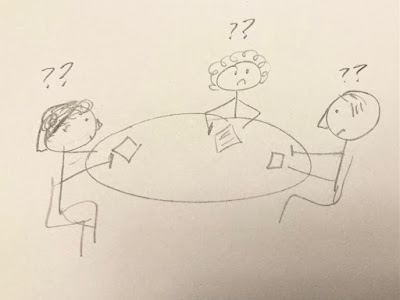
The cheerful young teacher—I’ll call her Mandy-- handed us papers to fill out as the class began.

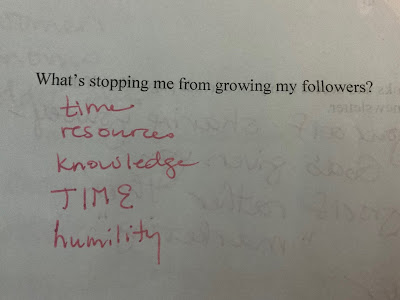
We looked at the first question, then at each other. “Where am I now with number of subscribers?”

The second was like unto it: “Where would I like to be with number of subscribers?”

I raised my hand. “Is this email subscribers or Facebook followers or what?”

“All of the above,” Mandy said. “Social media, email, everything.” 

“That’ll be easy,” muttered Tom. He jotted briefly, then said, “I wrote ‘Less than 1000’ because it sounded better than ‘Less than 100.’”

Jane frowned in confusion over her paper.

I tried to remember how many followers I had on Facebook and my blog, and how many people used to get my newspaper column by email. I guessed at the number of subscribers and added it to my list.

I seldom track my followers on various platforms, but even with my best guesses, and even comparing with Mr. Less Than 1000, my numbers seemed weak and pathetic when Mandy explained that publishers today won’t even look at your work unless you have at least 40,000 followers.
Mandy then launched into a rapid and confident lecture about followers, lead magnets, and promo tools, about Wix, genre, audience, MailChimp, and branding.

I glanced around and felt heartened to see that everyone looked as glum and confused as I felt. Writing conferences are rich sources of information and connection, but even at the best of times they can make your biggest fears bubble to the surface and your most persistent worries walk onstage in your brain. The question is always, “Do I have what it takes?” For my generation, the question has an added layer: “Do I have what it takes in today’s world?”

I felt like I understood about 30% of what Mandy said, but, essentially, what I took from the class was that subscribers and followers are crucial if you want to be a published writer, and email-newsletter subscribers are the blue ribbon/gold medal of the industry. Of course, to get email subscribers you have to snag that elusive prize: email addresses.

Hmmm, I thought. Apparently I need to find ways to ask people if they want to be on my email list.

But no. You can’t be that honest and obvious.

Mandy’s advice for obtaining all those addresses was this: you come up with a freebie of some sort—maybe a printable list of motivational quotes, or a short story connected to your books. You set this up with a website that’s designed for this sort of thing, and then link it to all your social media platforms.

“Click here for a free short story!!” “Free printable poster for moms!”

Then, when people click to get the freebie, a popup window tells them to enter their email address before they go on to the prize. And ta-da! You’ve got another email address to exploit, although Mandy didn’t use that word.

You’ve seen these boxes a thousand times, I’m sure, and happily typed your address. Well. Just so you know, someone was very happy to snag your address.

So, said Mandy, you then have their email address in hand, and pretty soon you’ll have enough accumulated for Zondervan and Revell to take your manuscript seriously. How happy is that!?

We were skeptical. Isn’t that kind of dishonest? Shouldn’t you ask people straight up if they want to sign up for updates from you?

Oh no, it’s not sketchy at all! You are actually giving them something they want, not a brand or a sales pitch so much as a piece of YOU, of emotion, of connection, of inviting them along on your journey! Share what God’s given you, rather than “marketing!”

Across the table, Tom muttered, “This process makes me feel like I’m selling timeshares.”

Despite our questions and confusion, Mandy’s happy, confident demeanor never faltered as she lectured on and on, the unfamiliar terms flying at us like baseballs that clonked into our heads and left us dazed. Premade templates! Podcasts!  Tools for launching! Opt-in forms!

“I can never do this,” said Jane when the class ended. “I guess I can’t ever be published.”

We filed out, twenty-five people with a fragile dream, feeling like maybe the world had moved on and we were left behind with no more chances of success.

As I wandered toward the coffee server in the foyer, I couldn’t stop thinking about the two Amish ladies I’d met the week before.

After I had spoken at a ladies’ retreat in another state, Paul and I attended a fish-fry fundraiser in an Amish community. Two of the women recognized me and came over to talk. They were also authors, young sisters-in-law who had collaborated on a fiction-based-on-fact book that was doing well in the Anabaptist world. One of them mentioned that they’d just ordered their third printing.
Authors are nosy, so I had to ask, “How many books are in each printing?”

“Five thousand,” she said, quite matter-of-factly, as though sharing that they get two dozen eggs every day from their hens.

My stars.

I was very impressed and told them so.

I Googled this just to make sure my impression was right. It was.


How many fiction books sold is considered successful?

Qualifications aside, if you are a new writer at a big publisher and you've sold more than 10,000 copies of a novel you are in very good shape — as long as you didn't have a large advance. It should be easy for you to get another book contract. If you sold more than 5,000, you are doing pretty well.

--Scribemedia


So, as I left the class on marketing, I tried to correlate these conflicting situations. First, the Christian publishing world with its emphasis on glitz, gimmicks, social media, and a vast following. And then, these two sweet Amish women on their way to selling 15,000 books with no online presence, no premade templates for emails, and no pre-launch magnets. They fly completely under the radar of both the Christian and secular publishing industries, and quietly outsell a good percentage of the books published with great fanfare in the broader world.

I saw Mandy near the table where my books were set out for sale, so I told her about the Amish writers I’d met and how I felt there had to be some way for us older, traditional writers to be successful without all the online marketing methods. She looked as confused as Tom and Jane [and I, I’m sure] did during her class, and I’m sure I didn’t explain myself well, because the jarringly-different images were still clanking together and breaking in my brain, and I was trying to process my thoughts by talking to her.

How did I expect a young online marketing expert to understand the unique connectivity of the Amish community, a world that flourishes out of sight, much like the mushrooms of the Oregon forest that are connected underground over vast areas, forming the biggest living organisms in the world?

[More info here] [email address not required]

I didn’t tell her this, but recalling the Amish authors gave me a sense of hope after that disheartening class. Maybe Mandy and others like her won’t have the last word about publishing.

I wonder if future historians will look back at the writers of my generation and wonder what it was like to navigate the enormous, sweeping changes in communication. I would like to think they’ll give us credit for adapting, for developing skills and watching them become obsolete, and for forcing ourselves, at retirement age, to become inept kindergarteners, slowly learning to post Instagram photos and Facebook Lives.

It happened in transportation and medicine in previous generations. My dad, I’m told, was the best horseman in the county when he was a young man in Oklahoma. By the time he was in his sixties, he farmed with tractors. All that hard-won knowledge and expertise with horses was obsolete, and he was stuck in a more modern world, always wrestling with mysterious, cantankerous, uncooperative machines, always seeming incompetent.

James Herriot, in his books about working as a veterinarian in Yorkshire, tells of the dispensary full of bottled chemicals and medicines, and all the hard work to learn the exact dosage for each disease in each sort of animal. Then all that knowledge was useless, swept away by the new antibiotics that came after World War II.

When I first pursued writing, the process was strict and straightforward. Magazines, newspapers, books. Typewritten query letters, synopses, and sample chapters. First, second, or full rights for periodicals. We learned at conferences to write informative queries, to include the title on each page of the manuscript, and to keep a rotation of articles in the mail, circulating from one potential publisher to the next to the next. We knew that double spacing and proper margins were important to editors. Often, there was only one copy of our manuscript, and if it got lost in the mail, it was gone forever.

Then, it all changed.

First came computers, writing programs, and the end of KoRecType. Blogs, Instagram, Facebook, TikTok followed, with content creation that included not only writing but photos, videos, links, gimmicks, and giveaways. Paper publications disappeared. Online marketing became essential. It was a wild and rapidly changing world with a completely new set of skills.

We seasoned Mennonite writers, having worked our way slowly up the publishing ladder, closed our filing cabinets full of manuscripts, rejection letters, and sample magazines and watched slack-jawed as young Mennonite moms launched YouTube channels, racking up more followers in one year than we had scratched together in 30 years of submissions, rejections, and early-morning typing.

“But Mom, you’re not competing. They post cute videos of their babies and living room décor. You write real writing. It’s completely different.” That’s what my lovely daughters told me when I tried to explain how disconcerting it all feels. They are my guides to the internet world, interpreting and coaching, and their words helped. “Besides, you reach a completely different audience. It’s not like they’re stealing anyone from you.”

I said I know that, but still. Sometimes the influencers write books, and then it feels like competition, even though there’s room in the world for both of us.

Jenny said, "You're not an influencer. Yeah, they'll sell books, but no one reads them."

"Come on. No one?"

"Well, ok, but they end up at Goodwill. They don't keep them and re-read them."

Our son Ben said, “Just remember that followers don’t necessarily translate to sales.”

All right then. My kids obviously think I should follow my calling and let the influencer moms follow theirs. Sometimes they’re wiser than me.

Recently, a discouraged author friend called me. While she’s younger than me and far beyond me in email formatting and online marketing, she still feels dismayed at the young women posting on Instagram or channeling the vibe into successful online businesses. “I really can’t help but compare myself with a young lady in our community. She randomly started a small business printing cards and that kind of thing, and she just “gets” the Instagram look, if you know what I mean. She’s just gone gangbusters. And I think about how long and hard I’ve worked, and I still have way less of an audience.”

“You’re not competing,” I said, parroting my daughters. “You write actual books.”

My friend brought me up short with a brutal fact. “She can afford to add onto her house and fix it up pretty. Not to be ungrateful for what I have, but let's be honest, that's the most glaring difference between her work and mine."

I could only sympathize. Maybe we’re not competing in the same race, technically, but we are conservative Mennonite women presenting creative content to the world. It was hard enough in our day to gain an Anabaptist audience. It was ten times as hard to find publishers and readers in the broader non-Mennonite culture.

And then Sharla from down the road hops on Instagram, as they say, and a year later has thousands of non-Menno followers hungry for a taste of the simple lifestyle. Furthermore, she makes money at it.

It’s incredible to watch it happen. I am happy for them in the same way that my grandma was probably thrilled that her children had running water and modern washers.

At the same time, I wonder about the effects of success coming so easily. Did farming with horses or typing on a typewriter build a sort of character unavailable today?

I also circle back to all the characters in this story, such as those Amish authors, writing and selling books in a universe outside of social media and mainstream Christian publishing. I think of Mandy, telling us confidently how marketing needs to be done, and the grandma at my table, feeling like there’s no room for her and her story.

I have always said that each of us has a story to tell, and we need to find a way to tell it. So I really should applaud those who do, whether it’s self-published Amish women or Sharla Stoltzfoos in her white veil, baking bread for an audience of 50,000.

I wish the big Christian publishers would choose authors more for quality content than for the potential audience they bring. I wish Marketing Mandy could recognize that her rapid-fire teaching excludes my generation, and especially the writers who are twenty years older, making us feel like today’s publishing world has no place for us.

I think we who tell stories of any kind need to draw others in rather than building fences that keep them out. What would it be like if Mandy sat down with the Amish authors and they learned from each other? Or if a young influencer interviewed Jane and shared her story on YouTube?

Maybe the Mennonite ladies on Instagram, reading to their babies in their pristine white living rooms, could teach me a thing or two about growing an audience and being a Mennonite woman telling her story to a secular world.

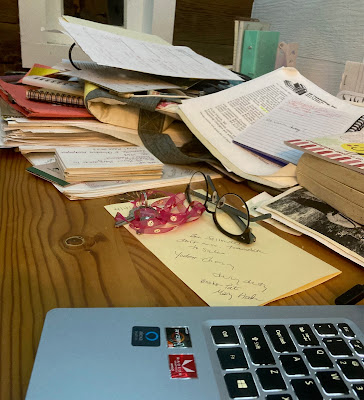
Most of all, I need to tell my own story and follow my own calling. These days, that means typing on a laptop surrounded by handwritten notes on random papers, producing books outside of traditional publishing, and doing all I can to mentor beginning writers and encourage the experienced writers who feel bogged down in the waves of change swirling all around.
I don’t know how history will judge my generation of authors, but I hope it will be said of us that we adapted with the times, we drew others in, and we were brave. Most of all, I hope we will be found faithful to our calling of telling our stories, whether that involved typewriters or TikTok.


And here's my brave attempt at online marketing: You can order my books HERE.

Monday, May 22, 2023

Ask Aunt Dorcas: Letting Adult Children Go

Dear Aunt Dorcas,

I have 6 children, and they are very much like you have described yours - hard-working, education and career-seeking.

And now, my second oldest daughter, age 19, just got a job offer that will take her about 9 hours from our home in South Florida. It’s definitely what she wants to do and I’m so happy for her, but I’m really struggling with this. She will be leaving the only home she’s ever lived in - I brought her home from the hospital to this home. All the rest still live here, and I feel like there will be a hole that I won’t be able to fill once she’s gone. Many tears, so much sadness on my part, but I won’t show it to her because that would be wrong to do I think.

Can you give me any advice that might make this time easier for me? I would appreciate it so much. This has just been so hard for me.

Thank you and God bless you richly.

Heidi

After a visit home, Amy navigates the security line at PDX on her way back to Thailand.
Not pictured: Aunt Dorcas crying.

Dear Heidi,

My heart goes out to you. Every mom reading this, if she has any empathy at all, is feeling for you as well.

I have many thoughts on this subject, and I may wander around for a while here, spelling them out.

For our women’s Sunday school class, I’ve been teaching about how Jesus related to different women. Last week, I looked at how Jesus and his mother related to each other. It’s a fascinating study.

Mary’s experience as a mom was both unique and universal. Carrying the Messiah was a once-in-history event, of course. So was the virgin birth. A few other women had an angel show up and announce a forthcoming pregnancy, but no prophecy was quite like the one Gabriel gave Mary. “He will be great and will be called the Son of the Most High. The Lord God will give him the throne of his father David, and he will reign over Jacob’s descendants forever; his kingdom will never end.”

Can you imagine?

Yet, despite this incredible beginning, Mary’s story as a mother is also universal. She is all of us, every mom, down through history.

1. She was deeply invested in her child.

2. Her child had a destiny and calling apart from hers.

3. It hurt to see her child moving away from her to do what he needed to do.

4. Her child’s calling was more important than her feelings.

So many times, I’ve circled back to Mary’s experiences. For example, she “kept all these things, and pondered them in her heart.”

That is all of us moms, watching silently, drawing conclusions, seeing progress, lying awake and thinking, praying for what we believe in but cannot yet see.

The episode at the wedding in Cana when they ran out of wine--that has a universal thread as well. Does anyone else see this story playing out like a movie in their minds? Do others find it as funny as I do? Mary hears about the problem—there is no more wine! Well! Oh my, we can’t have that! We sense the wheels turning in her head—she knows just what to do! Off she goes, weaving through the crowd, and nothing is stopping her. Jesus is having a deep conversation with his buddies, and Mary breaks right into the middle of it. “Jesus! We need you! There’s no more wine, and you have what it takes to make this desperate situation all better!”

He doesn’t leap to his feet with an eager, “Great idea, Mom! Thanks for letting me know!”

No.

We see him, collecting his thoughts after being interrupted mid-paragraph, and his friends all looking at Mary, resenting the intrusion. “Why do you involve me?” Jesus says.

Well. She doesn’t answer that, knowing good and well that she’s said enough and it’s time to be quiet, so she leaves it at that and slips away.

She also knows very well that he’s going to indulge her and save the day, because he's so nice, so she pulls the servants aside and whispers, “Do whatever he tells you.”

He saves the day in quiet but spectacular fashion. Of course he does.

What mom hasn’t been there? Here is a need, and we know exactly what ought to be done, and by whom. Off we go to find our adult child, the one who amazes us with their talents and abilities, so far beyond ours. “Katie! They need a teacher at Elliott Prairie this fall!” “Jonathan! They need more guys for the community choir!” “Amanda! We need someone to decorate for the baby shower!”

Then, with full confidence in their compliance, we tell the social committee that they can count on Amanda to do the decorations, we’re sure of it.

Meanwhile, our talented children may or may not be ok with us offering their services, and we may or may not have a good idea of how God is calling them to serve.

And then, of course, we also relate to Simeon’s terrible prophecy to Mary.  “A sword will pierce your soul.”

When did it begin, the sharp blade breaking the skin? Maybe with the frantic search for the twelve-year-old Jesus. And then the shocking moment when Mary didn’t have a frightened child run to her arms for comfort, as she probably expected, but instead had a determined young man tell her firmly that she didn’t need to be so upset because, after all, he was doing his Father’s bidding.

His destiny was more important than her feelings.

Surely nothing was ever as painful, sharp, or deep as the sword in Mary’s soul when she stood watching as Jesus was crucified. All the predictions, all the miraculous moments, all the things she had stored up in her heart must have ricocheted in her mind as she watched this kind and loving son suffer beyond imagination.

Two thousand years later we normal moms, imperfect and overwhelmed yet loving our imperfect offspring more than life and breath, we remember the unique pain Mary endured and we sense that the prophecy was not only for her.

It is for all of us. Our child’s destiny calls, their purpose begins its fulfilment, and a sword pierces our souls. God’s purpose for them is more important than our feelings.

When our children leave home, eager and excited about their future, we wave wildly until the car rounds the last curves and disappears from view. We hug our children at the airport and watch as they disappear into the security lines.

Then we sit down with a cup of tea and cry because the sword is deep in our souls and the pain is crushing us.

It is right that they go, and we wouldn’t want them to stay home, frustrated and bound by our wishes, but that doesn’t make it hurt any less.

I write here mostly about the physical leaving and moving out, but of course this is about any kind of growing up and pursuing a life separate from yours.

To you who are doing this for the first time, I hate to break it to you, but you are going to say goodbye and send them forth many times. The piercing sword is the price of your love, your investment, your hard work bearing fruit.

It’s right and good. It hurts.

Your feelings are valid, and they matter, but not enough to drag your child back to you.

What do you do now?

Here are my thoughts and advice, born of endless launchings and goodbyes.

1. Cry just enough in the airport or when they pack the car to move out so they know you’ll miss them but not so much that they feel guilty for leaving or like they need to rescue you. They need to feel loved and missed but also free to seek their fortune.

2. Remember that it will be truly awful while they’re in transit. You will imagine hijackings, icy roads, danger at every turn, sickness, lost passports, armed predators, flat tires. Let it be awful. Don’t try to make it better. Sit down with a pot of tea and a flannel blanket and a box of tissues. Cry a lot.

3. Also remember that it will get better after they arrive. Once they’re at the college dorm or the Nairobi airport or the new apartment, you will get a text or email or call, and suddenly you will be able to breathe again. Wash the teapot and put the flannel blanket away, but keep the Kleenexes close. I didn’t say you’d be all better, only that a weight will come off.

4. Explain to the children who are still at home that they need to indulge you for a little while. This is what moms are like when their children leave. It’s normal. You don’t love them any less than Katie or Sam who just moved out, and you will do the same when they go. They can hug you if they want, but it isn’t theirs to fix. Laugh a bit through your tears. Moms are silly like this, and it’s ok.

5. Find someone to talk to. My husband doesn’t miss the kids in the same way that I do, and it puts a burden on him if I expect him to feel exactly what I’m feeling. It’s good to find another mom who’s been through the same letting go. God bless the mom friends who listen and empathize. 

6. Arrange a regular time to talk. A young person living an exciting new life sometimes has a hard time remembering to stay in touch. Give them time to figure out their schedule, then plan a weekly or monthly phone or FaceTime call. Our daughter Jenny in Virginia doesn’t have a regular time to call, exactly, but she often calls when she’s walking home at the end of the day, and I hear a familiar recorded voice at the crosswalks saying “Wait!” It’s an odd thing to find comforting, but I do.

 Amy, who lives in Thailand, connects with me by WhatsApp video call on her Sunday mornings and my Saturday afternoons. I can’t explain what those calls do for me. She bakes her Sunday potluck food while we talk or kills a big spider. I hear the neighbors’ chickens and they also comfort me in an odd way.

7. I was going to say “pray a lot,” but of course you already do and always will. Even if you hear disturbing reports of your faraway child, remember that God is there with them and he cares about them even more than you do. He has a good purpose for them, and a solid plan. Believe it even when no one else does. Have faith--it's the evidence of things not yet seen.

8. If you can, get your child to commit to a tentative plan for coming home for Christmas or summer break or furlough. It will help a lot if you have an idea of when you’ll see them again, even if it’s a long time off.

9. Go visit them. When my children are far away, I have this urge to see them in their current environment. To do this, we have traveled to Jamaica, Thailand, Virginia, Colorado, Houston, Washington DC, Toronto, South Carolina, Pennsylvania, and probably other places besides. There’s nothing quite like seeing where your child is living, where they work, and who they interact with. You need to drive the roads they drive, worship where they go to church, feel the wind and heat and cold, and meet the people who invest in them. After you’re home, you’ll be able to picture what they’re doing and where they’re going. It will ease the sting of missing them.

10. Face the question, “Who am I now?” Many of us have poured our adult lives into our families, and it shakes our foundations to have them grow up and move on. You are still you, only older and wiser. God has a purpose for this stage, and you need to seek it out. As your responsibilities lessen, it’s ok to pursue your interests and have fun. Go hiking, grow dahlias, learn to paint with watercolors. Invest your time in ministry you couldn’t do when you were raising a family: lead a Bible study, host guests, volunteer at an elementary school. Of course it’s scary. Do it anyhow. Your adult children will be better able to pursue their calling if they know you’re busy and occupied.

11. Get professional help if you can’t function. Eventually, you should be able to enjoy life again, even if you miss your children. Sometimes, instead of normal sadness, moms experience a debilitating grief so deep they can’t function for a long time. It can indicate that the pain of your child leaving is connected to a deeper pain from long ago that was never examined or healed. Or maybe your children distracted you from an unhealthy marriage, and now you are forced to face it. Or you are terrified of the future and feel like you’re worthless if you’re not a mom.

There is help available. Google “counselors near me,” or ask around for recommendations. This is probably more than a friend and a pot of tea can fix.


Uncle Paul and Aunt Dorcas visited their kids in Texas


After the excruciating pain of watching the crucifixion, Mary saw the resurrected Jesus. What was it like, I wonder, to see God’s redemptive purpose fulfilled? She had another goodbye, not long after, when Jesus ascended to Heaven, and Mary knew she wouldn’t see Him again on earth. She lived out her days with the apostle John, who would have loved Jesus like she did, only without the unique aspect of being his mom. I like to think that she and John made tea and told stories about Jesus and discussed all the things that Mary had kept and pondered in her heart, all those years.

Someday, I hope we can sit down with Mary and talk about all the things that only a mom understands—the love, the destiny, the letting go, the piercing sword, and the ultimate redemption of their sacrifice and ours.